
EDITORIAL: President turned up the economic heat with Hormuz blockade
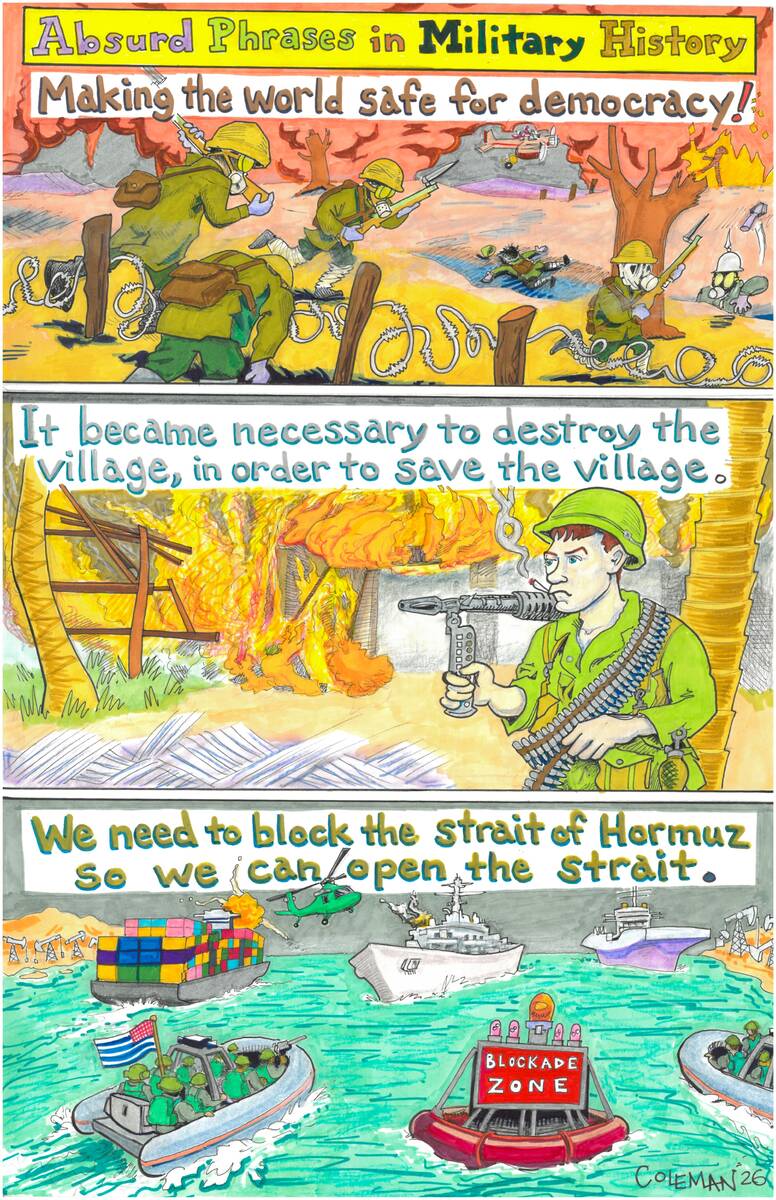




The American blockade in the Strait of Hormuz altered the strategic equation in the Iran conflict. It also has the attention of our enemies.
Peace talks between the United States and Iran broke down as the latter made a number of demands after mistaking President Donald Trump’s desire for a quick end to the conflict as a signal he was prepared to cave on key points. It was a woeful misreading of the situation.
Last week, in response, Trump ordered a partial blockade of the Strait of Hormuz to put maximum economic pressure on Iran, which fuels its economy largely through oil shipments that traverse the waterway. The U.S. Navy was to carry out the operation by stopping vessels that exit or enter Iranian ports. U.S. Central Command said that American forces would not “impede freedom of navigation” for ships heading for or coming from other ports, NBC News reported.
The plan was also to begin sweeping the strait to disarm Iranian mines.
Mr. Trump had been reluctant to take such a step for fear of further disrupting the global economy and pushing gasoline prices even higher. But the strait — along with Iran’s nuclear ambitions — became the focal point of the conflict with Iran attempting to exercise control of the vital shipping lane. The United States did the world — grateful or not — a favor by stepping in.
The response from Tehran was instructive, if not unintentionally comical. Various accounts indicated that Iranian officials called the blockade illegal and even “piracy.” Really? And what has Iran been doing for the past month by preventing safe passage or charging tolls through the strait? Meanwhile, China’s foreign minister lamented the U.S. move, saying “that blocking the Strait of Hormuz is not in the common interest of the international community,” according to a statement.
Keep in mind that China buys 80 percent of Iran’s oil exports.
A successful operation would cause significant pain for Iran. Mardo Soghorn of the Middle East Forum reports that the nation accrues about $280 million in daily export revenue and receives about $160 million in imports each day — a total economic impact of $13 billion a month. “Iran’s vulnerability is significant,” he wrote Monday. “More than 90 percent of Iran’s $109.7 billion in annual trade passes through the Persian Gulf, while oil and gas generate around 80 percent of export earnings and account for 23.7 percent of gross domestic product.”
Iran’s navy at this point consists primarily of smaller speedboats that patrol the strait. Will the regime risk escalation? The Iranians are apparently gambling that they can outlast Mr. Trump. Perhaps Xi Jinping — whose nation stands to be deprived of a primary energy source — can help disabuse the mullahs of such notions.
The views expressed above are those of the Las Vegas Review-Journal.