

EDITORIAL: There are plenty of reasons to reform Medicaid
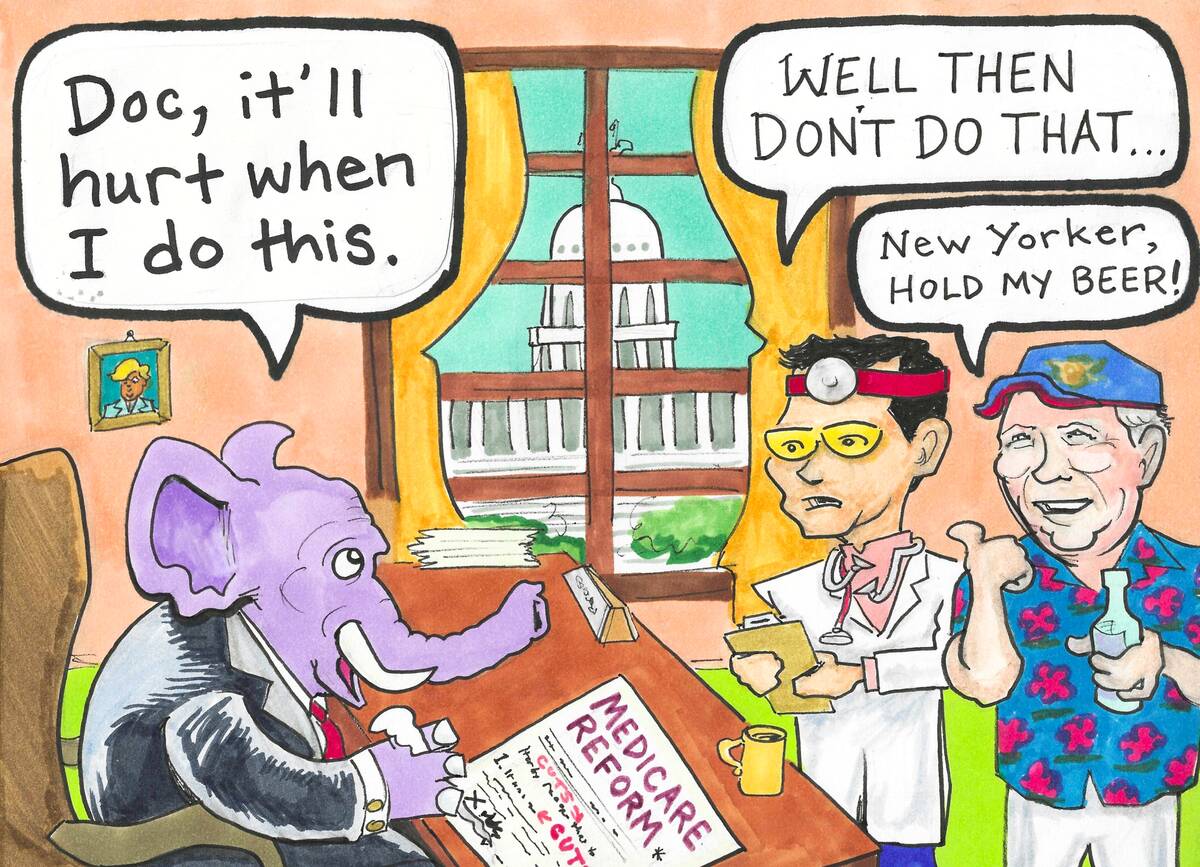





Debates over entitlement programs bring out the worst in elected officials, who are typically more concerned with political survival than addressing difficult problems. That’s partially why the nation finds itself fast taking on water as it founders amid a sea of red ink approaching $37 trillion. The current conversation about Medicaid “cuts” is a case in point.
Congressional Republicans have offered their proposal to reform Medicaid, the federal program to provide health care for the poor. Democrats are salivating over the opportunity to portray them as mean-spirited, heartless scoundrels eager to doom the Little Old Lady Who Lived in a Shoe and her dozen young charges to lives of deprivation and suffering. The attacks have a familiar ring. (See: 2012 ad in which Republicans who oppose Obamacare dump elderly grandma out of her wheelchair and off a cliff.)
In fact, there will be no “cuts.” Medicaid spending, which cost federal taxpayers $606 billion in fiscal 2023, will continue to increase. The House GOP seeks only to slow the program’s rate of growth by $880 billion over a decade. Even with such savings, spending would still be projected to grow by $1.5 trillion over that 10-year period.
Doing nothing shortens the road to fiscal ruin. Medicaid spending has exploded in recent years far faster than the growth of Medicare or Social Security. That’s because Democrats have encouraged states to expand coverage well beyond the disabled or impoverished Americans the program was established to help. States have also made liberal use of various accounting gimmicks to shift more costs to Washington.
The vast growth of Medicaid — part of the progressive effort to nationalize U.S. health care — has created perverse inequities. The Wall Street Journal notes that the federal government covers 50 percent to 77 percent of the cost of the program for “pregnant women, the disabled and other low-income populations.” But it pays 90 percent for “prime-age adults” who became eligible for support under Obamacare. This discrepancy is intentional: The extra federal money was intended to push states, such as Nevada, into liberalizing enrollment requirements, leading to ever-higher costs.
A work requirement for able-bodied adults — a mandate supported by a majority of Americans — could realize $120 billion in savings, according to House Republican estimates. Paring back eligibility to pre-COVID levels would also help.
Proposing reforms to encourage healthy, working-age adults to move off of public assistance is fair and just. But some Republicans are beginning to sweat over the potential political fallout. They should steady themselves, find their footing and instead pose the question: Why do Democrats insist on diverting Medicaid resources from the poor to the able-bodied, thereby jeopardizing the program’s long-term fiscal health?
The views expressed above are those of the Las Vegas Review-Journal.