
STEVE SEBELIUS: Democrats reluctant to give up redistricting power
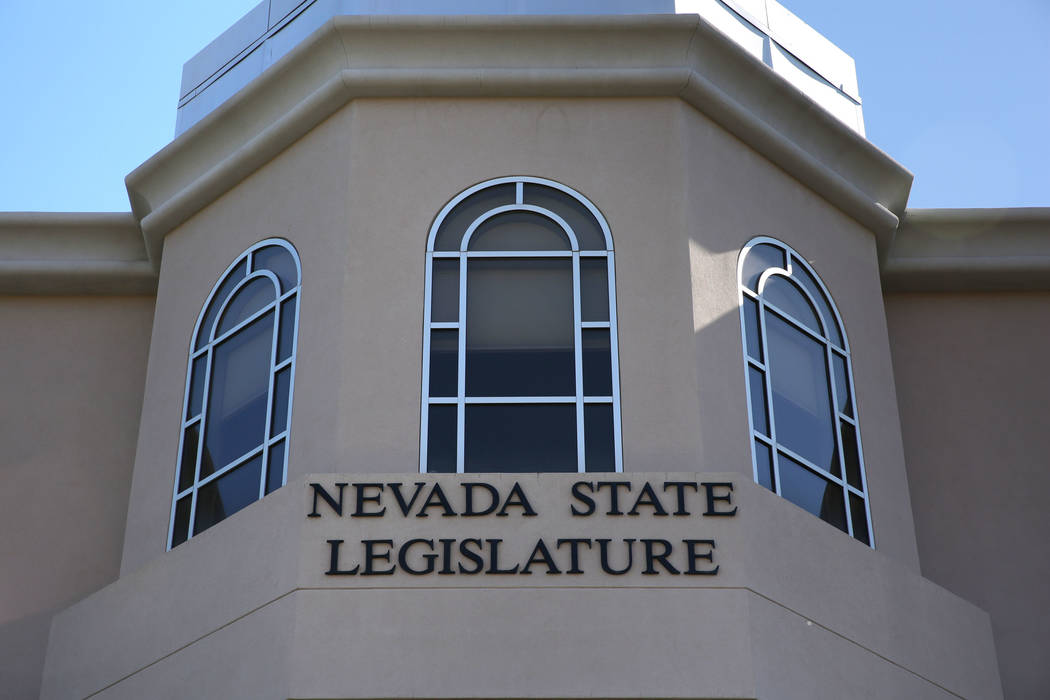





To fully understand how little Nevada Democrats appreciate the authors of a constitutional amendment calling for an independent redistricting commission, you have to understand the background.
First, it’s taken Democrats 20 years to win back the governor’s mansion. Since Bob Miller left Carson City in early 1999, only Republicans have lived at 606 Mountain Street in the capital.
That translates to two decennial censuses and two redrawings of Nevada’s political maps. In 2001, a special session was required to get the redistricting plan done. In 2011, then-Gov. Brian Sandoval vetoed new district lines drawn by Democrats, and a panel of special masters was assigned the task instead.
But now, Democratic Gov. Steve Sisolak lives on Mountain Street.
Second, Democrats have worked hard to gain big majorities in the Legislature. They’ve come a long way since 2014, when Republicans won the Assembly, the Senate and every constitutional office in the state.
Today, following the elections of 2016 and 2018, Democrats have a supermajority in the Assembly and are one vote shy in the state Senate.
Because it takes only a simple majority to pass a redistricting plan, Democrats are poised to be able to control the process, assuming they can keep control of both houses in the 2020 election, which appears likely.
Third, things have changed significantly on the legal landscape with respect to redistricting. The U.S. Supreme Court ruled in June in the case of Rucho v. Common Cause that partisan gerrymandering is a political question, beyond the reach of federal courts to adjudicate.
“But we have no commission to allocate political power and influence in the absence of constitutional directive or legal standards to guide us in the exercise of such authority,” Chief Justice John Roberts wrote for the majority.
Who does have that commission? Elected officials. Nevada’s Constitution, in Article 4, Section 5, says the Legislature has the “mandatory duty” to decide the number of senators and Assembly members and apportion them among districts according to population.
In many states, the Supreme Court’s ruling cuts against the interests of Democrats. But in Nevada, it’s essentially a license for them to tilt the map toward their party.
In other words, it’s the perfect reapportionment storm for Democrats, who can look forward to at least a decade of hegemony over the state, if not longer.
But now, along come the do-gooders at the League of Women Voters, hoping to take partisanship out of the process, right when progressive partisans have finally seen the stars align in their favor!
It’s little wonder that Democrats are underwhelmed, at best, by the idea of giving up one of the most nakedly political powers lawmakers possess.
Some Democrats, including Gov. Sisolak, have pointed out that the “independent” commission won’t be all that independent because the first four members would be chosen by the Republican and Democratic leaders of the Legislature. (Those four would then select three others to bring the commission’s membership to seven.)
That’s also one of the key contentions of a lawsuit filed against the initiative, which argues its self-description is misleading to potential petition signers. The lawsuit contends that other states have found various ways to make the process more independent by selecting commission members who aren’t likely to have a political bias.
But don’t think it’s just the Democrats. If Republicans were in charge of the Legislature and the governor’s office, they would be every bit as outraged over the independent-commission idea as their counterparts. Love for the power of reapportionment is bipartisan and shifts only depending on whether your party is in charge.
Strip away the partisan interests, however, and you’re left with the basics of a good idea. Partisan gerrymandering is one of the key roadblocks to bipartisan cooperation in Washington, D.C. If you represent a district heavily weighted with your base’s voters, compromise with members of the other party is not just politically risky, it can be downright suicidal.
And the lack of willingness — or political ability — to compromise is one of the things that’s ground the national government into virtual dysfunction. That hasn’t happened in Carson City — at least it hasn’t yet. Preventing gerrymandering may be one step toward ensuring it won’t end up that way.
Steve Sebelius is politics and government editor at the Las Vegas Review-Journal.