
No touching or feeding the horses
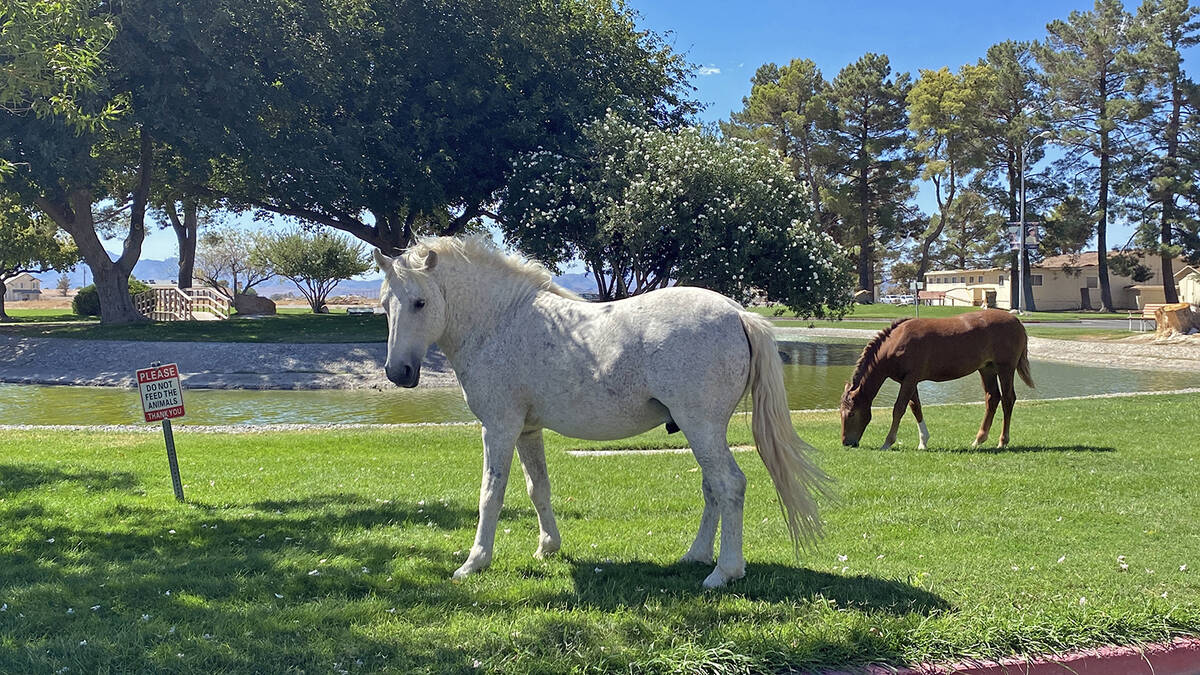
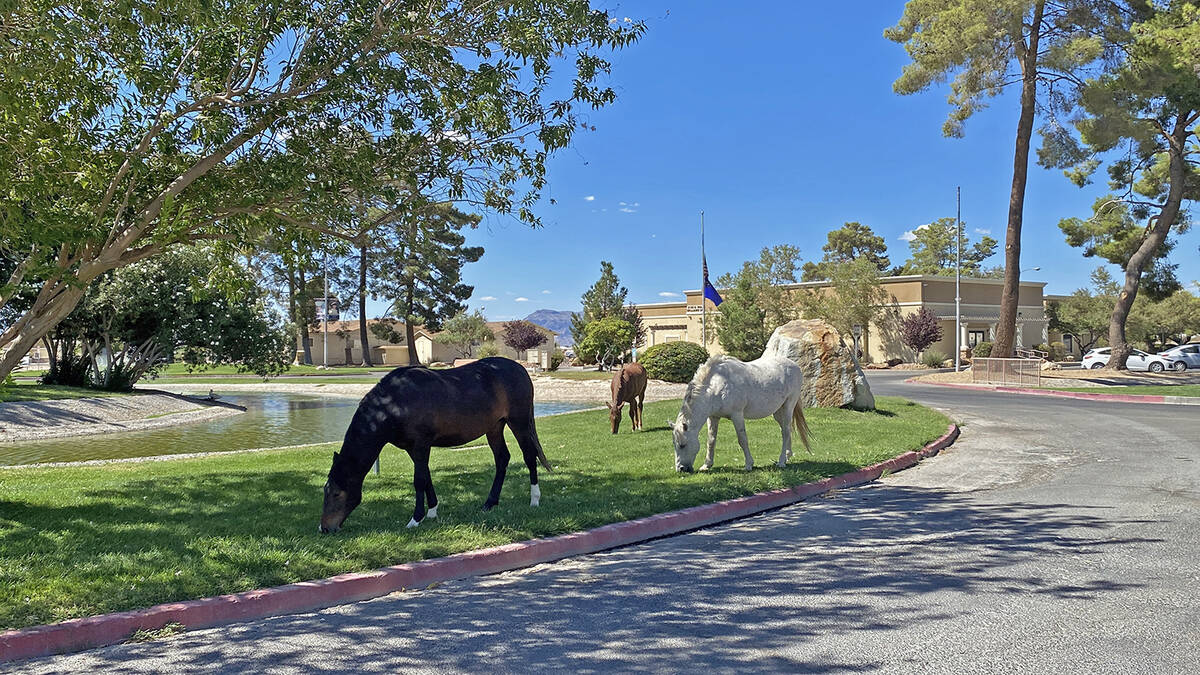

With the birth of the little filly, Zamora, to what has become known as the Calvada herd, interest in these wild horses has spiked in recent months and the increased attention has led to several issues.
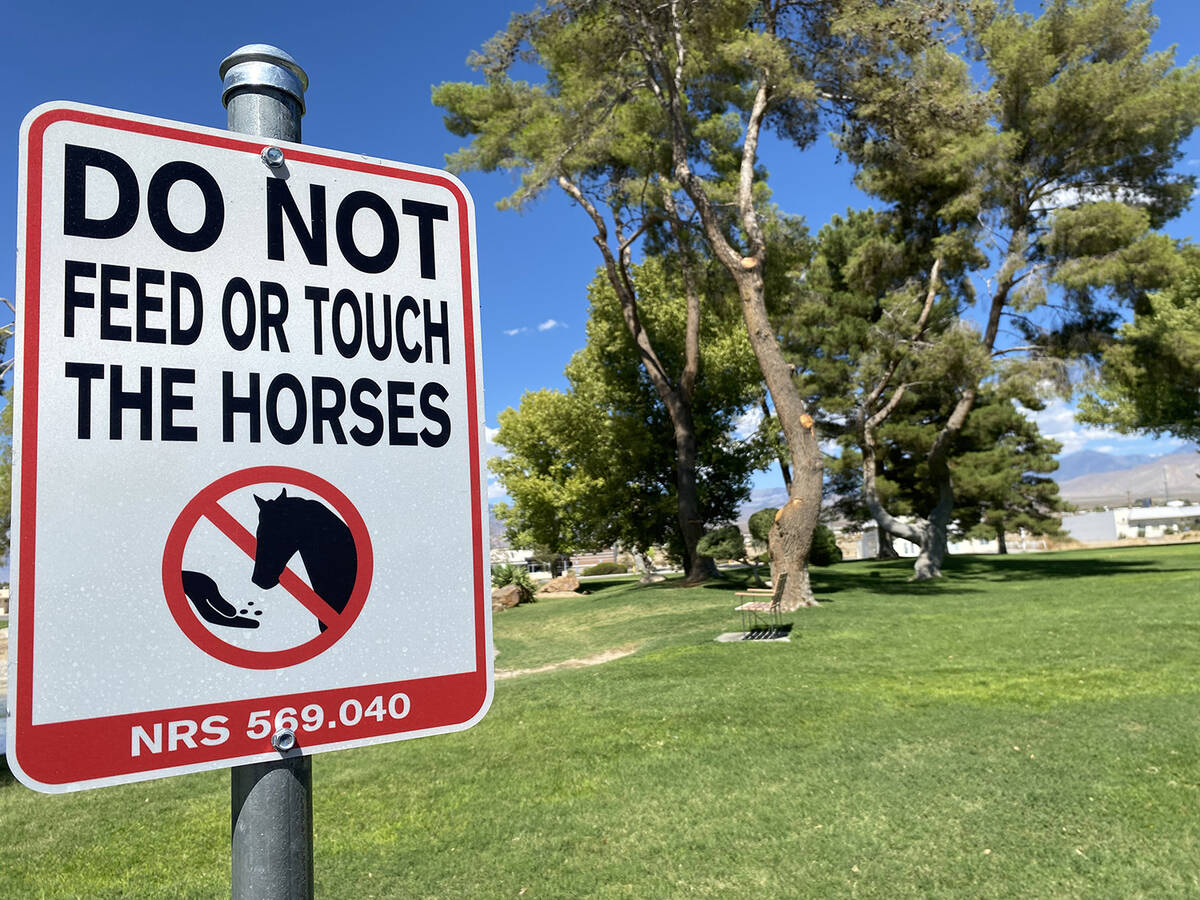
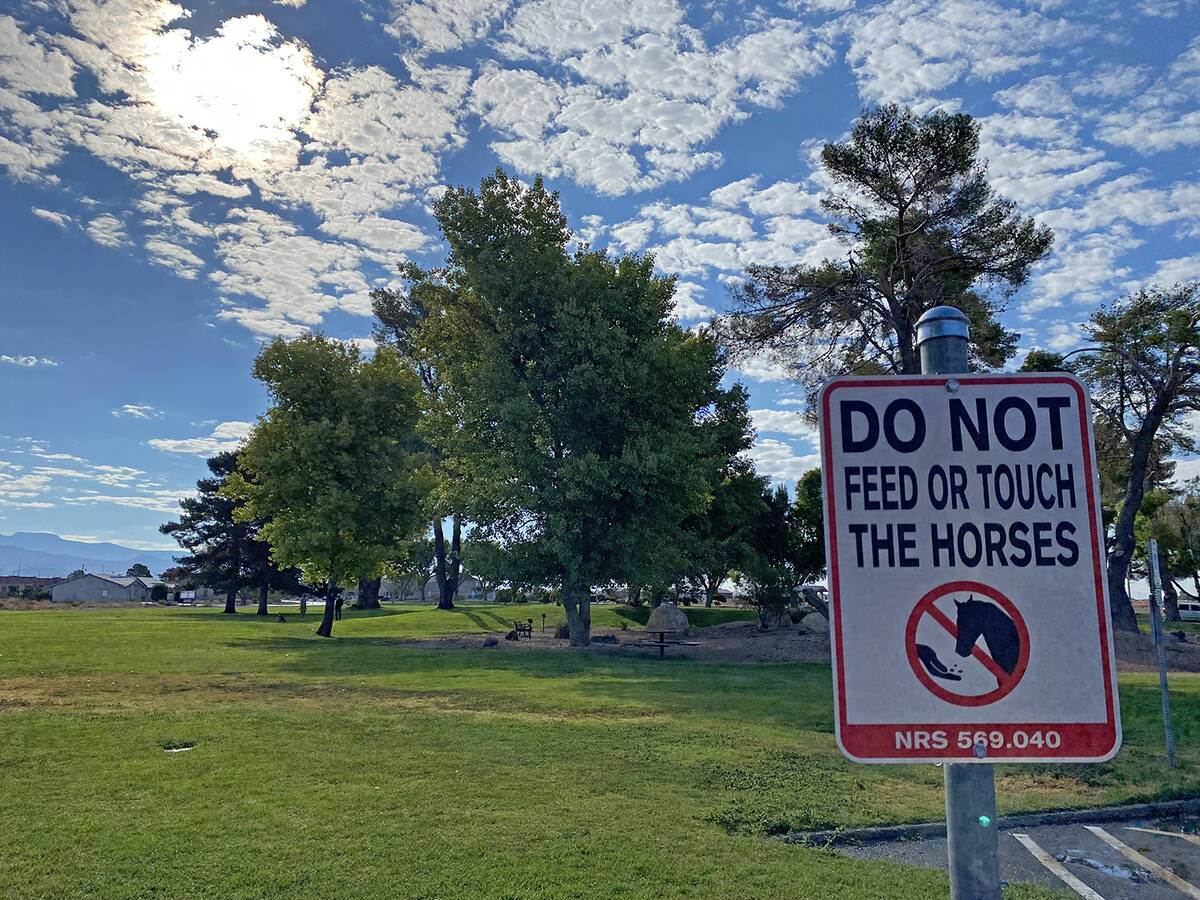
People attempting to touch, feed and even ride the wild animals prompted members of the equine advocacy group Southwestern Wilds to call upon the town and county to install signs citing Nevada law, which states that such actions are illegal, a call that has now been answered. As of last week, signs advising residents and visitors not to touch or feed the wild animals per Nevada Revised Statute 569.040 have been placed all around the Calvada Eye and more are reportedly set to be installed across the community.
“The signs were installed by the Nye County Buildings and Grounds and town of Pahrump Buildings and Grounds departments at the request of the Nye County commissioners,” officials told the Pahrump Valley Times. “The presence of wild horses has been a topic of discussion in many commissioners’ meetings and these signs are part of an ongoing effort to communicate to the public that feeding wild animals, including the horses, is illegal and can be dangerous.”
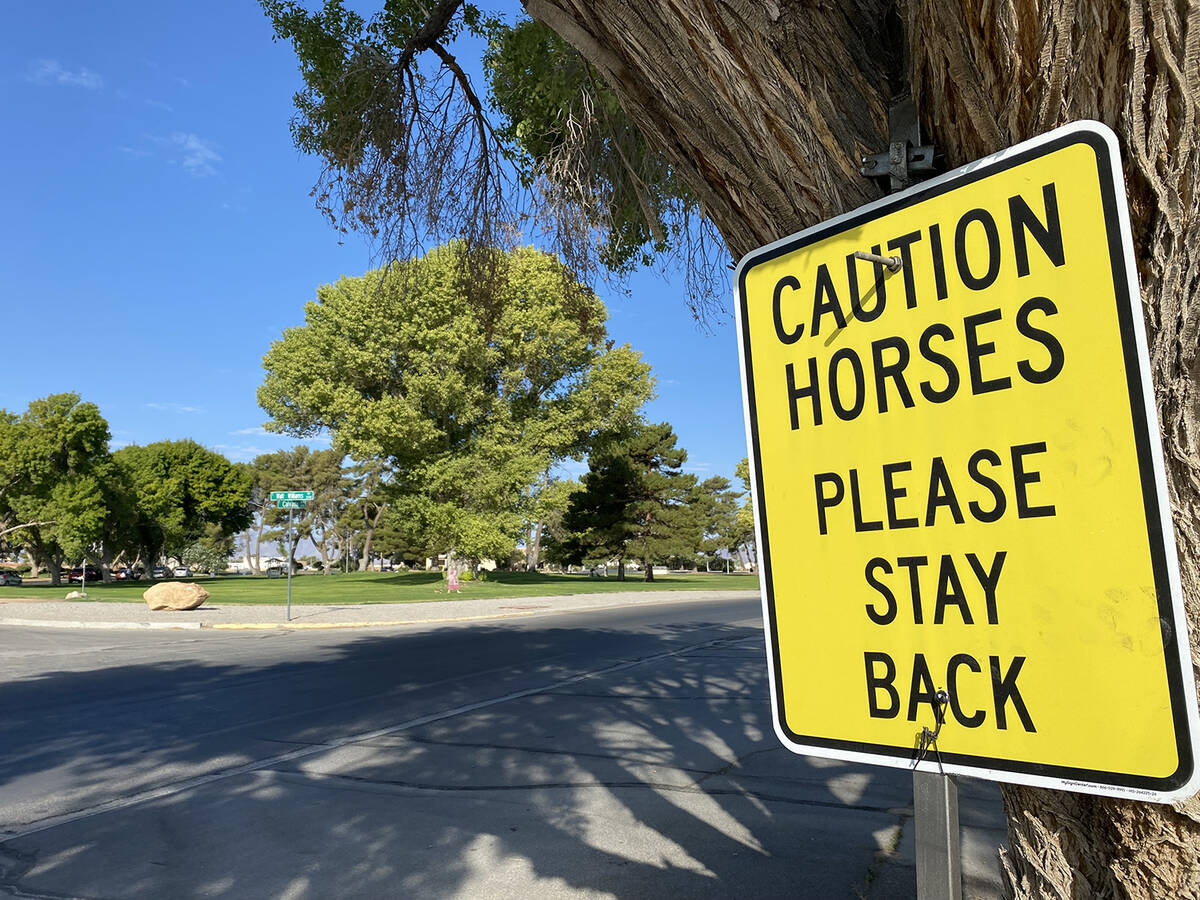
Buildings and grounds crews installed the new signs the week of August 18 through 22, although officials did note that these are not the first signs to have been installed in the area. However, over time, other versions of signs have been destroyed, damaged or taken down.
The new signs were greeted with joy by those who love to observe and wish to protect Pahrump’s wild equines.
“We are the champions for the voiceless! After a long fight, we finally got our signs! Thank you for listening, town of Pahrump,” Southwestern Wilds member Renee Jones enthused in a post on the nonprofit’s social media.
Jones was one of the first to speak out about the need for the new signs, telling Nye County commissioners in July that the cautionary signs that were already at the Eye were not having the intended effect because their messages are not backed by a cited law. “Many who are in support of keeping the horses and burros safe feel that if an NRS code is posted on some of these newer signs, that this could help the horses and safety,” Jones had remarked.
Hundreds of others were clearly thrilled by the addition of the new signs at the Calvada Eye, too, with dozens commenting on Jones’ post.
“Yay! It’s a big win for our wilds! Let’s keep them safe Pahrump. Signs are going up all over town. As always, be aware and safe. Love our wilds from a distance,” Southwestern Wilds Vice President Vanessa Fernandez said, while organization founder and president Vickey Balint remarked, “It’s been a long time awaiting and only the beginning. Thank you to those who have and will not give up.”
“They are so beautiful and we are so lucky to live where we can see the wild horses and burros. Let’s keep them safe by keeping our distance,” Joanne Calabrese commented and Jennifer Bastian Granados added, “Great job. I really hope that people look at and listen to the signs. Not only is it dangerous but they will be removed if people just don’t listen.”
Bastian Granados was referring to the fact that the Bureau of Land Management can be called in to round up wild equine herds in the event that their presence becomes a nuisance or hazard to the community. Although horses are domesticated animals that people often keep for work and companionship, those that remain wild should not be treated the same, equine advocates stress.
Wild horses should be left to their own devices and should never be fed by humans, something that can create problems for horses and people alike. Not only do the animals learn to seek food from non-natural sources, which can put them in close proximity with humans and cause complaints, property damage or accidents, it can also make the wild horses ill, as had previously happened with Zamora. Likewise, wild horses should not be approached or touched, as they are dangerous and can easily harm a person if startled or made to feel defensive.
Under NRS 569.040, “[It] is unlawful for any person or the person’s employees or agents… to take up any estray or feral livestock or retain possession of it or feed any estray or feral livestock.”
NRS defines “estray” as, “Any domesticated livestock or progeny of domesticated livestock showing signs of domestication running at large upon public or private lands in the state of Nevada whose owner is unknown in the section where the animal is found.” Feral livestock means, “Any formally domesticated livestock or progeny of domesticated livestock which have become wild and are running at large upon public or private lands in the state of Nevada and which have no physical signs of domestication.”
Anyone found to be in violation of this statute shall be notified upon the first offense. Subsequent violations constitute a gross misdemeanor, which is punishable by a fine of up to $2,000 and/or 364 days in county jail.
Contact reporter Robin Hebrock at rhebrock@pvtimes.com