

Horse road safety forum generates interest and ideas


What can be done to better ensure the safety of both area drivers and the wild horses and burros who call the valley home?
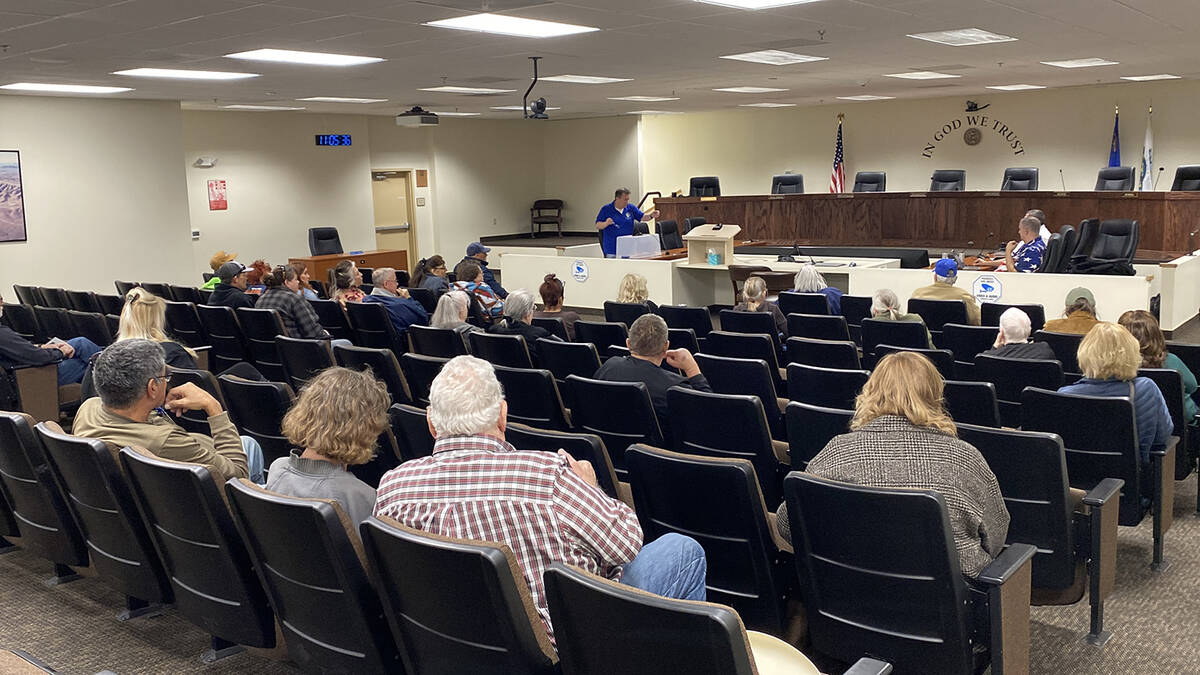
This was the question at the center of the community forum hosted by Nye County commissioners Ian Bayne and Bruce Jabbour, which took place Saturday, Jan. 24 with about 40 area residents in attendance. After an hour-long discussion with many points of view and different ideas brought to the table, there appeared to be a general consensus. Increased awareness of the presence of wild horses and burros, slower speeds by motorists, fencing and cattle guards, more signage to draw attention and tougher enforcement each have their own role to play in the problem. How to accomplish these objectives, however, is another matter and one that the Nye County Commission will soon be delving into.
“There is a need to address the deaths of animals on the highway and that’s what this is about. It’s a very complex situation because there are different jurisdictions – we have federal, state, county, it’s really a mess,” Bayne told the crowd assembled for the forum. “We will all talk and get input from everyone here who wants to give input, then we’ll agendize this and come up with some kind of idea how to move forward.”
In addition to Bayne and Jabbour, all three other commissioners were in attendance, along with several members of the equine advocacy group Southwestern Wilds and residents concerned about the situation.
Kicking off the discussion was Southwestern Wilds President and Founder Vickey Balint.
“This, today, is a milestone,” Balint stated. “We have been on this for two years and we are finally feeling that we’re making some progress and it’s only because of those local elected officials – whether you like them or not, they are here today and we are all working together to come up with the right solutions.”
She then turned it over to her daughter, Vanessa Fernandez, vice president of the nonprofit, who gave an overview of the items that the group has already determined imperative.
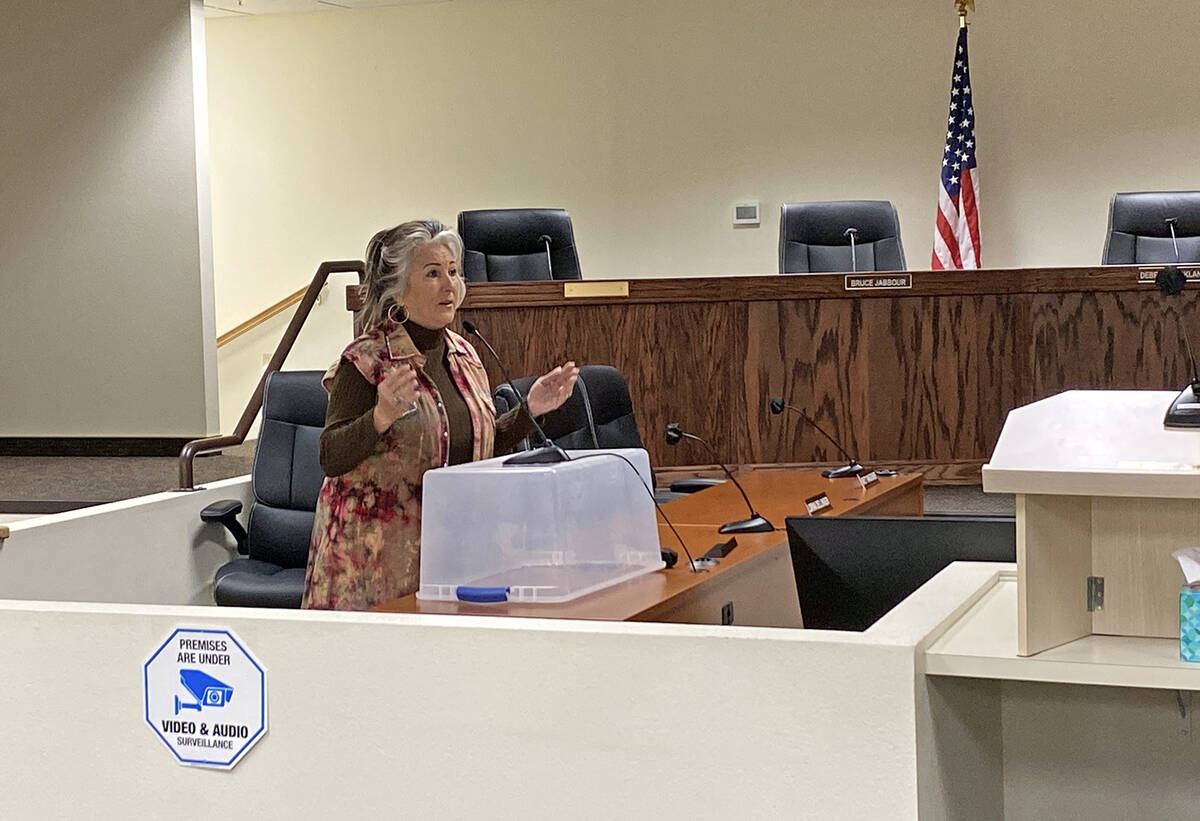
“We are prioritizing fencing improvements, especially along Roadrunner… all the way down 160. We need some maintenance and some new fencing proposals. We’re looking at Powerline from Roadrunner to Gamebird, running north-south, that will help protect wildlife by guiding animals safely away from the dangerous stretches,” Fernandez detailed. “Next, speed reduction measures in our wildlife corridors are crucial. We’re exploring options like variable speed limits and installing rumble strips and rivets to alert drivers when they enter high-risk zones. These steps can save lives, both animal and human.
“We also recognize the need for better lighting at high-strike zones – possibly implement lighting at intersections, so as not to cause unnecessary light pollution, yet enough to improve visibility that will help drivers spot animals and humans sooner and reduce the risk of tragic accidents. Safety enhancements like these protect everyone who uses our roads,” Fernandez continued. “We need signs indicating burro and horse crossings. It’s been proven that signs work and Southwestern Wilds is proud to have worked with NDOT and NCSO to get those electronic signs. They are solar-powered and they have very bright, speed indicating lights. But truly, infrastructure alone isn’t enough. Public awareness and advocacy play a huge role.”
Many others spoke on the matter, too, offering their thoughts and recommendations.
Tina Trenner, who has a deep knowledge of horses, built over her lifetime, stressed that wild horses are not going to change so it is up to humans to do so. She also noted that realistically-painted cattle guards are a good option for the cash-strapped county, being much cheaper than real cattle guards.
A resident who identified herself as Dawn said she would welcome more sheriff’s deputies in areas where horse strikes are common and speed limits are often ignored, a sentiment echoed by Diane Davis. Maryann Anderson brought up the possibility of speed cameras to automatically ticket those violating the speed limit.
Marlene Johnson expressed a desire to see the speed limit on Highway 160 reduced and Shana McCreedy suggested large horses and burros be painted directly on the roadway, using light-reflective paint, to help ensure drivers know that there are wild equines in the area.
As the meeting wrapped up, Bayne thanked everyone for coming and reiterated that the issue would be brought formally before the commission as an agenda item at an upcoming meeting.
Contact reporter Robin Hebrock at rhebrock@pvtimes.com