
In charge of $38 billion, PERS board learning investing basics





If you own more than $10 billion in bonds, you should know what a bond is.
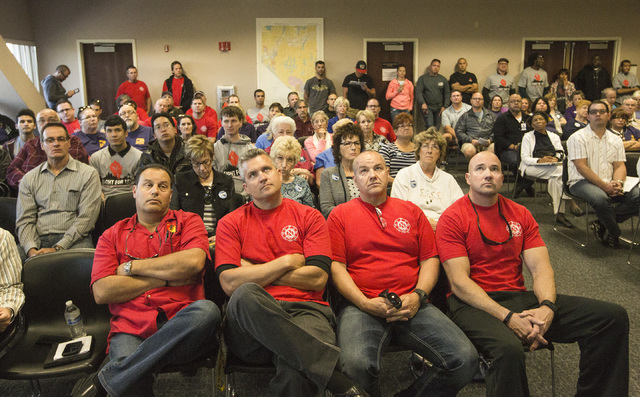
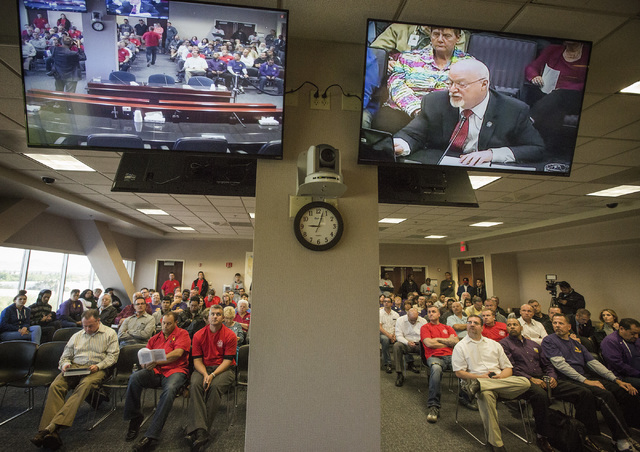
That’s why Public Employees Retirement System board members heard a presentation recently on bonds before their regular meeting.
This is like Nike’s board of directors attending a seminar called “Introduction to Shoes.”
You’d expect the seven people who are in charge of a $38.5 billion portfolio, including $10.6 billion in bonds, to have investing basics down. Especially when that portfolio is funded by taxpayers. Especially when that fund provides guaranteed retirement income to thousands upon thousands of former and current Nevada government employees decades into the future.
But you’d be wrong.
PERS provides its board members monthly education sessions. In March, board members learned the definition of inflation. In May, they took in an overview of U.S. stocks.
These are all fine things to learn. They’d be normal topics for an entry-level finance class. But you shouldn’t be getting a crash course on the stock market after you’re given control a stock portfolio worth $16.3 billion.
Nevada doesn’t require PERS board members to have any experience running retirement systems. The current chair, Mark Vincent, and vice chair, Katherine Ong, have financial backgrounds. That’s good, but not required. Instead, the most stringent mandate is that board members be participants in PERS.
Among the current members: North Las Vegas Fire Department Batallion Chief Scott Gorgon and Vikki Courtney, president of the local teachers union.
“It’s the fox guarding the henhouse,” said former Assemblyman Randy Kirner. In 2015, Kirner proposed expanding the board to nine members and including three private-sector members with experience in retirement plans. PERS and its allies fiercely opposed the bill, which didn’t make it out of committee.
“Having folks bringing an independent perspective is a good thing,” said Leonard Gilroy, the senior managing director of the Reason Foundation’s Pension Integrity Project. “That’s only healthy. We value diversity in the workplace. Why would that be problematic on the pension board?”
Knowledgeable pros would be able to challenge the groupthink on things like expected rate of return on investment. Assuming a high rate of return in the future — PERS banks on 8 percent per year — lowers contribution rates in the present. If returns don’t hit the mark, however, taxpayers’ future costs increase dramatically.
“If you had an independent voice, they could at least raise the alarm level to say, ‘In the private sector, no one expects to get an 8 percent annual return,’” Kirner said. “In the public sector, many have reduced, including the largest pension plan in the country (CalPERS). Why don’t we want to do that here?”
Kirner explains why. If the PERS board lowered its expected rate of return, it would trigger an increase in taxpayer contributions. That could cost hundreds of millions of dollars per year and give life to attempts to reform PERS, which provides benefits far more generous than any retirement plan available in the private sector.
A thorough discussion on expected rate of return — as dense as it’d be — needs to happen.
But don’t expect it to while the PERS board is still learning the differences between stocks and bonds.
Victor Joecks is a columnist for the Las Vegas Review-Journal.