
Letters to the Editor





DVH patient impressed with hospital staff’s service
I was recently rushed to the emergency room at Desert View Hospital with shortness of breath and heart problem. I am 87 years old with many medical problems, but not being able to breathe is the worst.
I arrived at a very busy time but was immediately attended to. I could not have asked for better service. I used three bottles of oxygen within eight hours. I immediately received an IV and medications.
I was made comfortable with a recliner and blanket. The nurse and PA were at my side at all times. After tests came back, I was advised I had pneumonia and had to be admitted. During the time in the ER the chief nurse came and checked on patients and inquired if we needed anything.
I was admitted after 7 p.m. and immediately had three different departments working on me. All of the above never happened to me in any ER and my problems made me use many. Desert View Hospital is a Valley Hospital property. Never have I received such service at any of their Las Vegas properties.
I have had five major abdominal surgeries and three were performed at Valley properties. During my stay at DVH I did not see a frown on any employee; that included the cleaning personnel. I even ate the food. I always lose weight in hospitals. Not at DVH.
I highly recommend this hospital. If anyone complains about the service at DVH they will complain about anything.
After my discharge, I received three follow-up calls and a thank you for letting them be a part of my recovery. I urge the CEO over all Valley properties to spend time at DVH and retrain his personnel in Las Vegas properties. Thank you DVH for your excellent service.
Heidy Coonan
Mediwaste facility could be ethical crisis states reader
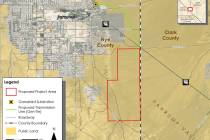
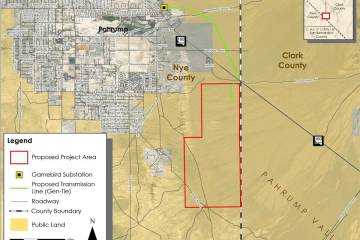
I encourage you to visit the Nevada Department of Environmental Protection (NDEP) website to read the draft proposal for the MediWaste pyrolysis facility, which is quietly moving through the permitting process. For those who haven’t heard, MediWaste—a medical waste processing company—had a conditional use permit approved by the planning commission in early 2024 and is now seeking an operating permit from the NDEP.
On the surface, it’s a compelling pitch: the facility uses pyrolysis technology to “recycle” medical waste, utilizes existing buildings, and requires very little water. Online boards even suggest the project could provide up to fifteen local jobs. However, certain details on their website and in the online drafts should give us pause. MediWaste’s website boasts a guarantee of “30% cost savings compared to competitors.” A careful reading of the draft permit suggests that some of those savings will be paid for by the residents of Pahrump—in ways we cannot fully quantify.
The most visceral concern is found in the “Accepted Materials” section. Section 4.8(d) explicitly includes “Pathological Waste,” which encompasses human and animal body parts, organs, and tissues. According to the company’s website, the pyrolysis process “transforms complex waste, especially mixed plastics, into usable bio-fuels, biochar, and syngas… turning waste into energy while dramatically reducing harmful emissions.”
When a patient consents to the disposal of a diseased limb or a surgical specimen—and here I will insert an allusion to the proverbial elephant in the room—they likely expect finality through incineration or landfilling. They do not expect their remains to become feedstock for industrial production. The idea that human tissue may be processed into recycled plastic products or used as soil amendments is more than just off-putting; it is repugnant.
Some might argue that “carbon is carbon”—that once the physical form is destroyed, it is chemically identical to burnt gauze or tongue depressors. Yet, there is a reason we do not raid crematoriums for fertilizer. This permit would sanction a system where human remains are treated as an industrial resource, even if only incidental to plastic or carbon reclamation. Without the explicit, informed consent of patients—and a corresponding obligation of transparency for the end consumer—this project represents an unconscionable breach of public trust. Far from a waste management panacea, this technology, used for this purpose, introduces an ethical crisis that Pahrump should not be forced to host.
Paul Greenawalt