
Letters to the Editor





Addressing cancer risks among firefighters
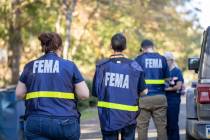
Firefighters in Southern Nye County and throughout Nevada continue to serve on the front lines of emergencies that range from structural fires and chemical leaks to military operations and wildland responses.
Yet what many do not realize is that this essential public duty is fraught with an escalating concern — repeated contact with toxic substances.
That means in a region defined by remote industrial zones, an agricultural sector, transportation hubs, and federal defense activities, responders are likely to encounter dangerous contaminants, such as heavy metals, volatile and semi-volatile organics, inorganics, and particulates generated by blazing structures, wildlands, petrochemicals, and equipment.
More alarmingly, these cumulative exposures have been increasingly linked to elevated cancer risks — with statistics showing firefighters experiencing approximately a 9% higher diagnosis and 14% spike in mortality rates compared to civilians.
Also troubling is that this issue is further intensified by the region’s proximity to federally operated testing and emergency response facilities whose operations have historically relied on asbestos-containing materials, and, most notoriously, aqueous film-forming foam (AFFF).
For one, the Nevada National Security Site, which maintains dedicated fire and rescue units covering nearly 1,400 square miles, manages hazardous material spills and suppression activities.
However, the AFFF used at this defense installation sounded an alarm, primarily because it contains per- and polyfluoroalkyl substances (PFAS) infamous for their environmental persistence and carcinogenic properties. Consistent with this, an interactive map shows over 700 bases nationwide — including more than five in Nevada — have already been contaminated with such chemicals, making countless military firefighters vulnerable to various malignancies.
Amid mounting awareness surrounding occupational cancer risks, the National Firefighter Registry for Cancer was established to create a more comprehensive system tracking exposure histories and long-term health outcomes of all kinds of firefighters.
Since its inception in 2023 through the Centers for Disease Control & Prevention, this centralized database has already surpassed 49,000 enrollees—with about 225 residents from Nevada — and continues to expand as one of the country’s most significant firefighter health initiatives.
But even so, such participation levels remain far below the size of the national fire service workforce — which comprises over a million responders — thereby leaving critical challenges in the data needed to fully understand how prolonged toxic exposure can affect firefighters over the course of their careers.
Broader engagement in Southern Nye County and across Nevada is thus crucial to strengthening scientific findings, improving occupational safety standards, guiding future prevention measures, and reinforcing access to healthcare resources and benefits for those who develop service-related illnesses after years of protecting their communities.
Christina Johnson
Cristina Johnson serves as a veteran advocate at the Asbestos Ships Organization, a nonprofit that raises awareness of veterans’ exposure to toxic substances.