

Well and septic do’s and don’ts




Water is life. Without access to clean, drinkable water, people cannot survive and in a town like Pahrump, where all of the water comes from a single hydrographic basin, preventing contamination is imperative.
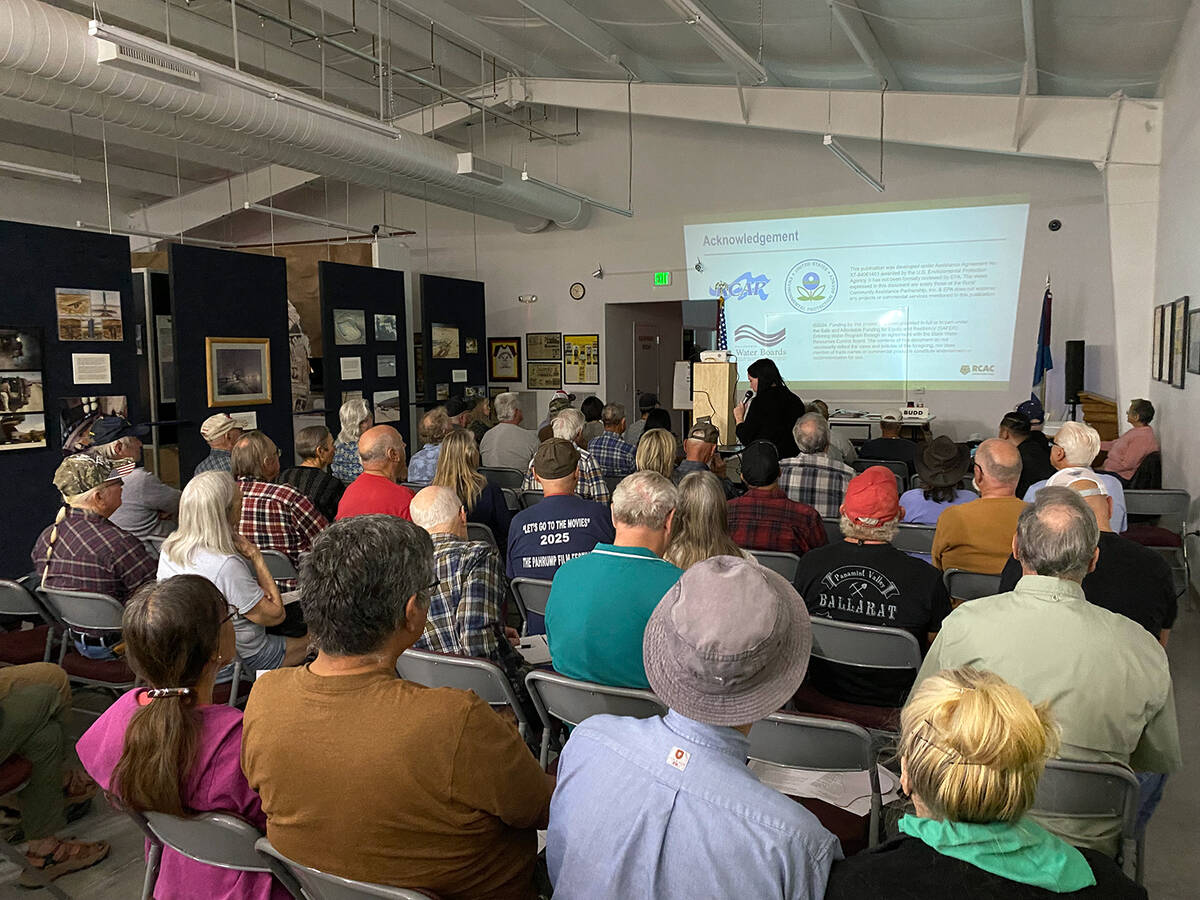
This March, during its regular monthly meeting, the Private Well Owners Association hosted a special presentation regarding this critical topic. Titled “Keep Our Drinking Water Safe”, the presentation was provided by Rural Community Assistance Corporation (RCAC), a nonprofit organization established in 1978 that is geared toward providing technical, managerial and financial assistance to rural and indigenous communities in 13 western states. RCAC Small Utility Consultants Christian Magno and Jessica Olson led the presentation, which educated attendees on the proper maintenance of domestic wells and septic systems, upon which thousands of local homes rely.
Olson kicked off the presentation with an overview of the RCAC before Magno dived into the meat of the presentation.
“As you know, Basin No. 162 is the sole source of water for the entire Pahrump Valley and unlike municipal systems, domestic wells are not regulated by the EPA,” Magno stated. “Groundwater quality here is actually directly impacted by the actions of every resident… The density of septic systems in Pahrump creates a unique risk for nitrate loading… Surface activities can introduce contaminates that can travel down into the aquifer and if it is contaminated, it could stay here for generations and your well water quality would be impacted.”
Homeowners are legally responsible for the drinkability of their own water, Magno emphasized, meaning each well owner is essentially their own utility manager. As such, ensuring both well and septic are in good working order is crucial.
The best way to do this is to conduct bi-yearly checks of domestic wells, including the cap, casing, plumbing and housing. A visual inspection can identify things like a small leak, exposed wiring or rust that, if left unattended, can turn into a catastrophic failure.
“A 15-minute walk around your well twice a year prevents most system failures,” Magno noted.
The same holds true for septics, which include what is referred to as a “leach field”. Signs that a septic system needs maintenance or repair include lush greenery growing on the leach field, slow drains in the home and nitrate spikes in the water. Residents are advised to have their septic pumped on a regular basis, with Magno explaining that a family of four should have pumping done no less than every three to five years.
“Pumping does cost around $400 but a new leach field may cost $15,000,” he stated.
Yearly water quality testing is another measure well owners can take, allowing them to identify any possible contaminants – whether nitrates from leaking septic systems, bacteria, or chemicals such as arsenic and lead.
“Just because water appears clear does not mean it is safe,” Magno said. “Arsenic, nitrates and lead have no taste, color or odor. Bacteria can be present in water that looks clear and by the time you smell a problem, the contamination is usually very severe… Only a certified lab can confirm the presence of chemical hazards – we’ve drank this for years is not typically a substitute for a lab report. Water quality can change overnight, due to neighbor activity or flooding.”
More advanced testing can give well owners a picture of minerals in their water as well, which, though not a health hazard, can affect the taste and smell of their water and cause staining in the home.
When it comes to protecting wells and septic systems, RCAC offers a variety of tips. For example, residents should maintain a 100-foot buffer around the well where no pesticides are applied. Well houses should have adequate ventilation to prevent mold growth and be kept clean to deter rodent nesting. No trees or large shrubs should be planted within 20 feet of the well, as roots can crack the well casing or grout. The area around the well should also be kept clear to allow for easy access for repairs and service.
So-called “flushable” products should not, in fact, be flushed, Magno noted, explaining that they do not break down in septic systems. Harsh chemicals such as bleach should be avoided, as they can kill the good bacteria in the septic tank that is key to keeping the system in balance. Leach fields should be kept clear of vehicles, as driving and parking on it can cause soil compaction or potentially damage pipes. Just as with the well, the leach field should not have trees or large plants.
There was plenty more education to be had during the 45-minute presentation, with Magno touching on the various methods for dealing with water contamination, specifics about potential contaminants and an overview of the components included in well and septic systems. All of this information and more can be found online at EPA.gov/privatewells
For more on the Private Well Owners Association, visit PrivateWellOwners.com
Contact reporter Robin Hebrock at rhebrock@pvtimes.com