
Nevada solar plant sells for cents on the dollar




A twice-bankrupt solar power plant in Nevada that was backed by the federal government has been sold for a fraction of what it cost to build.
Sons of Liberty Construction purchased the Crescent Dunes solar energy plant near Tonopah for $7 million. The sale closed this summer, federal court records show.
Overall, it cost more than $1 billion to build the massive energy complex and place in service, according to a court filing from a project lender.
Crescent Dunes, located 15 miles north of Tonopah and about 180 miles northwest of Pahrump, landed a $737 million loan guarantee from the Obama administration. It was touted as a first-of-its-kind facility that, by heating molten salt and generating high-pressure steam, would produce enough electricity for tens of thousands of homes in Nevada.
All told, it was seen as a blueprint for helping countries “around the world use clean, affordable electricity,” the U.S. Department of Energy once declared.
But the 110-megawatt project in Nye County was marred by leaks in its hot salt tank and, following operational shutdowns, the loss of a power-purchase agreement with NV Energy, court records show.
The project was also a complicated undertaking with a vast web of players.
As outlined in court papers early this year, the power plant originally involved numerous entities from California, Nevada, Texas, Delaware and Spain, and their subsidiaries; the Energy Department; NV Energy; and hundreds of millions of dollars “through a series of contracts and guaranties” to fund, build and start operating the complex.
Ultimately, the project went through two separate bankruptcy cases — the second of which resulted in the once-hyped power plant being sold for cents on the dollar.
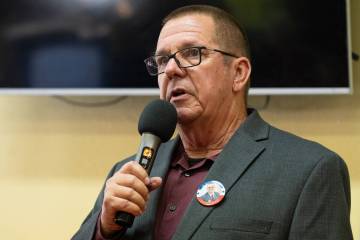
“This thing was a total disaster,” said project lender Patrick Hogan, founder of investment firm CMB Regional Centers.
‘Giant battery’
Crescent Dunes developer SolarReserve set out to build a solar plant in Nevada that would be the first utility-scale project of its kind in the United States to store energy in molten salt, “effectively functioning as a giant battery, with the capability to generate electricity at night,” according to a court filing in the first bankruptcy case.
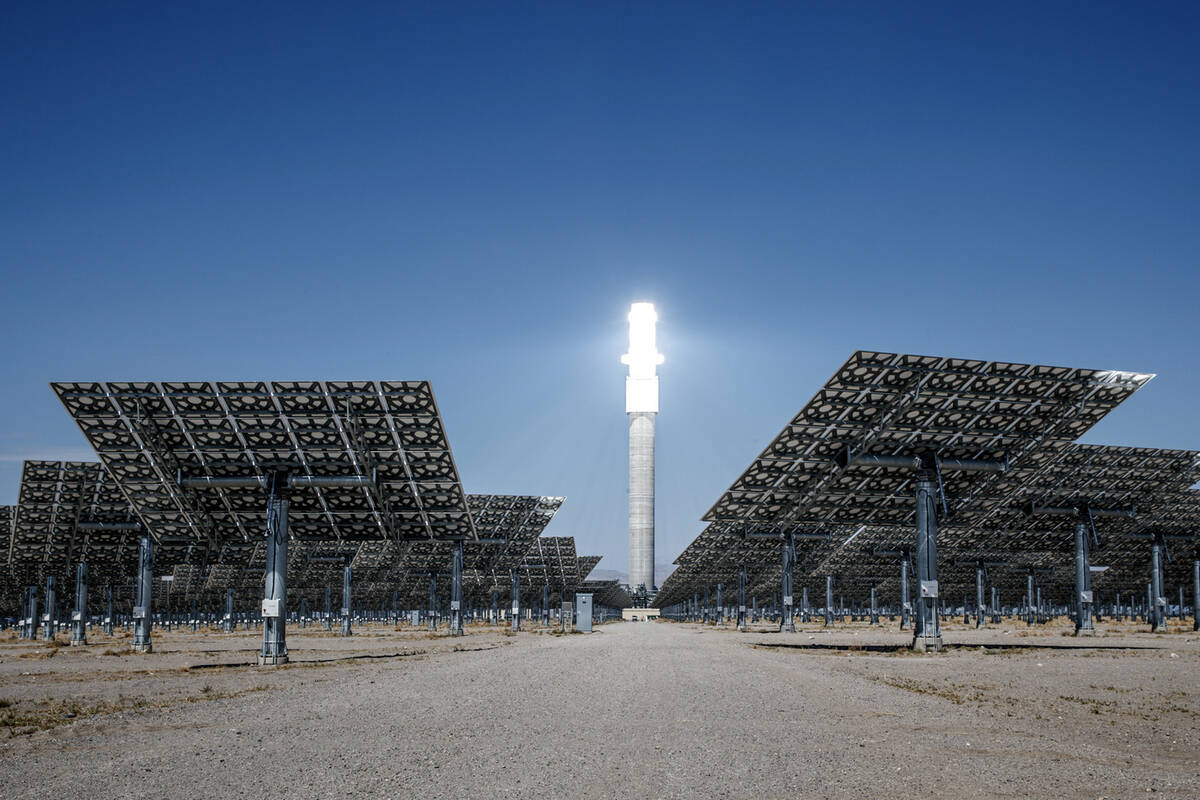
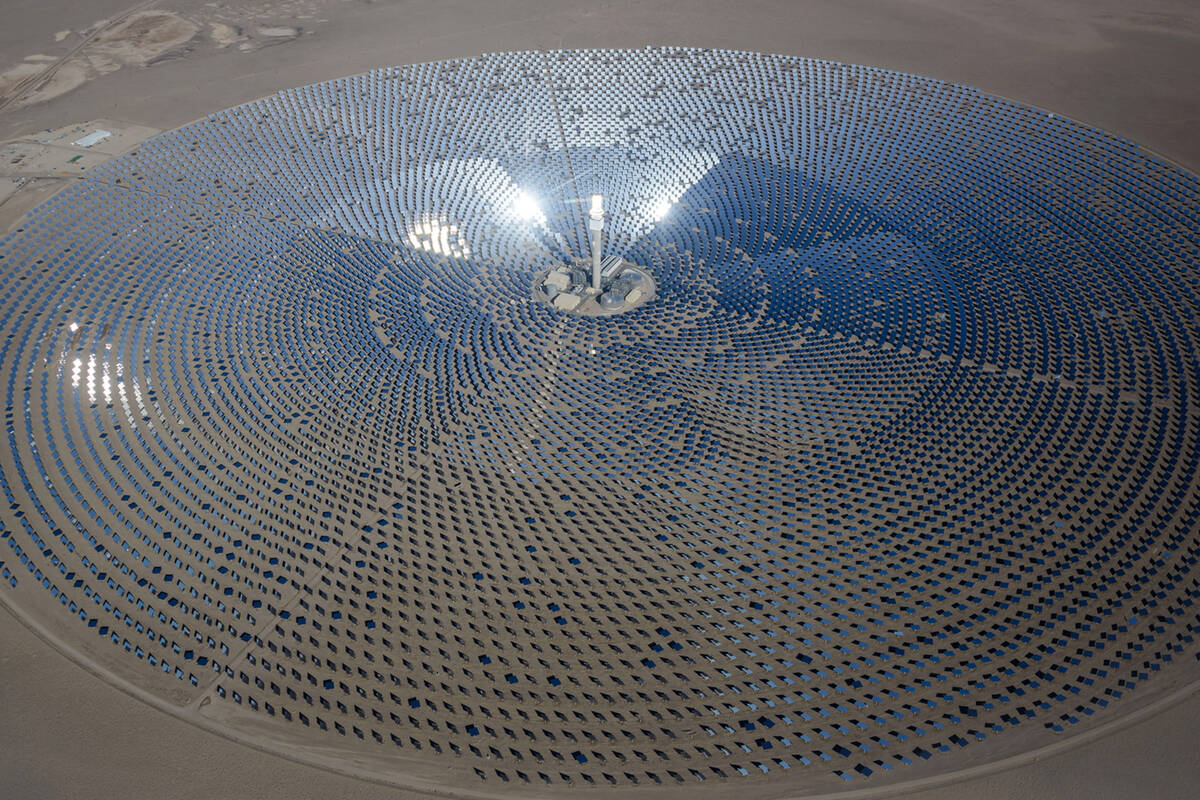
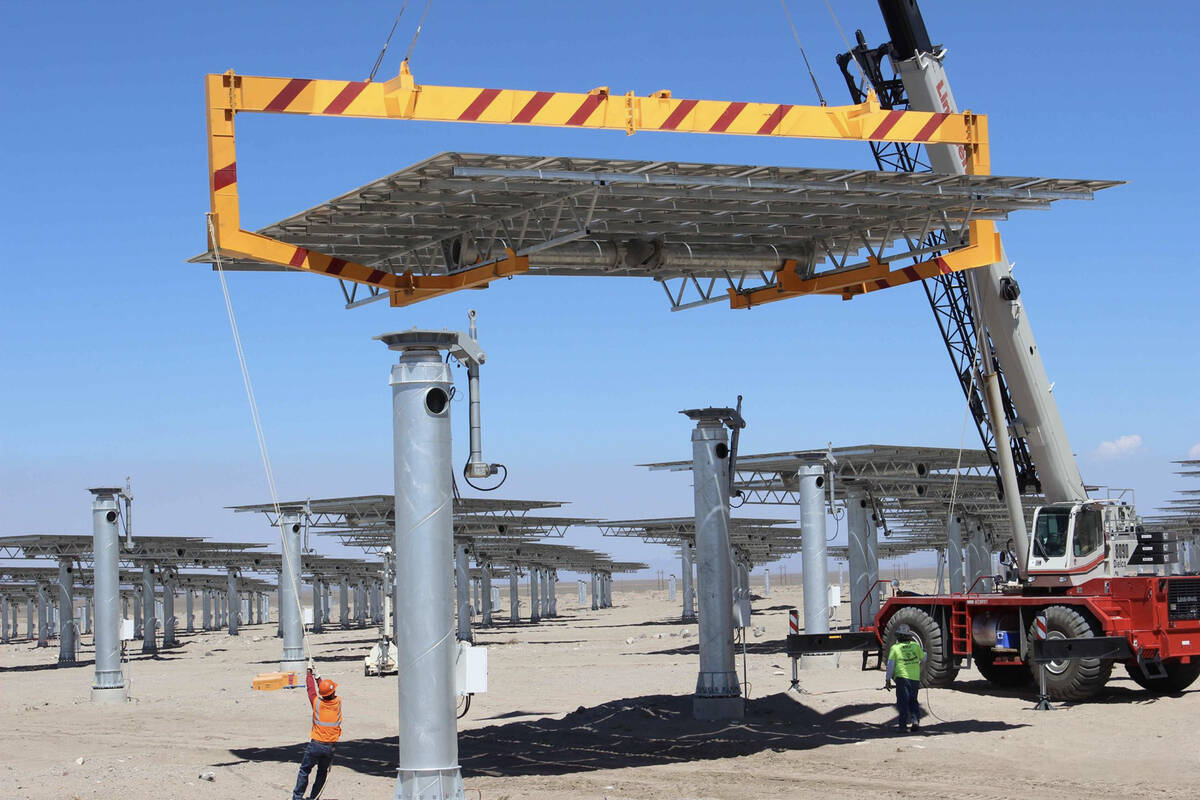
The power plant, which was built on land leased from the federal government, includes nearly 10,350 so-called heliostats, or giant mirrors, that collect the sun’s thermal energy to heat molten salt flowing through a roughly 640-foot-tall tower, court records show.
As designed, the salt is heated to 1,050 degrees Fahrenheit and produces pressurized steam, powering a turbine that creates electricity.
SolarReserve was working on plans for the energy complex by early 2008, and then in fall 2009, the developers entered an agreement with Nevada’s primary electric utility to be the exclusive buyer of the power generated at the plant, court records show.
Soon after, SolarReserve applied for a loan guarantee from the Energy Department, and the two sides signed an agreement for the hefty financial backing in September 2011.
According to a report at the time in the Las Vegas Review-Journal, the loan guarantee was coming from the same program that left taxpayers holding the bag on a $535 million guarantee, awarded in 2009, to Solyndra.
The California solar-panel maker had shut down and then filed for bankruptcy the same month that SolarReserve landed its own federal financial backing.
The people behind Crescent Dunes, however, said their project was a safe investment, the Review-Journal reported.
‘Blueprint for solar projects’
In early 2016, U.S. News & World Report ran a story on Crescent Dunes, reporting that SolarReserve had unveiled the world’s first solar plant that was able to generate power 24/7, on a large scale, without any coal- or gas-fired backup.
“It’s significant,” Kevin Smith, then the CEO of SolarReserve, said in the report. “We can put it in the middle of nowhere — in Africa or the California desert.”
According to the report, the project in Nevada was already working.
The Energy Department posted its own write-up on the complex in spring 2017, calling the project a success story.
According to the department, Crescent Dunes was designed to meet NV Energy’s peak demand periods and churn out electricity even when the sun isn’t shining, thanks to its “staggering” storage capacity.
All told, the plant could reliably deliver peak-period electricity to more than 75,000 homes in Nevada, the department said.
“Crescent Dunes serves as a blueprint for solar projects in Latin America, Africa, the Middle East, and Asia, helping countries around the world use clean, affordable electricity,” it declared.
‘Technical failures’
In fall 2016, however, the plant ceased operations due to a leak in the hot salt tank, court records show.
It was repaired, and the power plant resumed generating electricity in summer 2017.
However, in spring 2019, another leak in the salt tank was discovered, forcing the complex to cease operations again, according to court records.
NV Energy terminated its power-purchase agreement in fall 2019, wiping out the developers’ sole source of revenue from the power plant, court records show.
Then, in summer 2020, Crescent Dunes’ holding company, Tonopah Solar Energy, filed for bankruptcy protection.
At the time, the repair process for the second leak was still ongoing, and the power plant was not generating any electricity, according to court records.
On the same day as the chapter 11 filing, the Energy Department announced a settlement to recover $200 million in taxpayer funds from Crescent Dunes’ ownership.
A spokeswoman for the department, then under the Trump administration, said the project had “consistently faced technical failures that have proven difficult to overcome,” the Review-Journal reported at the time.
She added: “The department’s decision was made after years of exhausting options within our authority to get the project back on track, given the significant taxpayer investment the prior administration committed to this project.”
‘Further strained’
Crescent Dunes’ holding company reached a deal to sell its ownership in the power plant, and U.S. Bankruptcy Judge Karen Owens approved its reorganization plan in late 2020, court records show.
Still, the leaks didn’t stop.
After the power plant emerged from Chapter 11, it sustained three additional hot salt tank leaks, according to a court filing early this year.
To prevent future leaks, the owners ultimately lowered the operating temperature of the salt tank, which allowed the plant to reliably produce electricity but also reduced the amount of power it churned out, leading to lower revenues, the court filing stated.
Plus, it noted, the owners’ financial condition was “further strained” without a long-term power-purchase agreement in place.
The owners decided to sell the plant and launched a marketing process in 2024 to find a buyer. They were unable to close a deal, so they relaunched the marketing campaign in 2025.
Prospective buyers showed interest but “contemplated a bankruptcy sale process,” according to the court filing from Crescent Dunes’ holding company, which determined that a sale through court would “maximize value.”
The company figured that more would-be buyers would become aware of the sale through the bankruptcy process, “driving even more interest” in the power plant, according to the filing.
‘I’m going to fight’
This past January, Crescent Dunes’ holding company filed for bankruptcy protection.
Court filings in the case in February showed that Sons of Liberty Construction had reached a deal to buy the power plant for $7 million.
The sale closed in late July, court records show.
Sons of Liberty says on its website that it provides construction, maintenance and decommissioning services for chemical plants and other projects.
Efforts to speak with the company were unsuccessful.
Asked about power-purchase agreements involving Crescent Dunes, NV Energy spokesman Justin Hopkins said in an email this week that the utility does not currently have a contract with the energy complex.
He also said that NV Energy does not have any information to share on the power plant’s commercial arrangements with other parties.
Hogan, of CMB Regional Centers, said in an interview this summer that his group initially loaned $90 million for the Crescent Dunes project, and then loaned an additional $80 million.
He said that the second loan was paid back but that the first loan was not.
Hogan also estimated that he had spent around $7 million on legal fees in connection with the project, and he said that he would spend another $7 million until he’s told there’s no chance of recovering his money.
“If there’s a glimmer of hope, I’m going to fight,” he said.
‘Value destruction’
Court records and business-entity filings show that Hogan, through various entities, sued Crescent Dunes’ ownership and filed objections in bankruptcy proceedings.
In the first bankruptcy case, for instance, his group claimed in a court filing in summer 2020 that Crescent Dunes’ holding company was going to sell its ownership in the plant “at a substantially discounted price … while wiping out the rest of its equity holders,” records show.
In the second bankruptcy case, his group filed court papers saying that it did not object to the sale to Sons of Liberty, but that it wanted to preserve its legal claims.
Nonetheless, his team later submitted a court filing that stated the enterprise value of Crescent Dunes’ holding company had dropped by around $200 million from the projections in the initial bankruptcy case, calling this sharp decline “value destruction.”
Soon after, his legal team also submitted a court filing that claimed Crescent Dunes’ holding company and its management were “hopelessly conflicted,” given all the entities involved in the ownership and construction of the power plant.
Crescent Dunes’ holding company, meanwhile, stated in court papers that Hogan’s side was “on a scorched earth mission,” with “no merit to (its) claims whatsoever.”
“The extensive record speaks for itself,” the company wrote in court papers, adding that Hogan’s group had been “unsuccessfully litigating” against Crescent Dunes’ ownership since 2020, “pursuing a constellation of contract, tort, and statutory claims” in connection with the power plant.
Plus, every court or tribunal that considered the claims on the merits had ruled against Hogan’s side, it added.
Hogan told the Review-Journal that his job is to do everything he can to recover his investors’ money, and that he’s “not going to quit, ever, until it’s over.”
He also pointed to a green-energy failure that garnered heavy attention and scrutiny, whereas the saga of the power plant near Tonopah has garnered headlines of its own but not to the same extent.
“Everyone remembers Solyndra,” he said. “Nobody knows about this one.”
Contact Eli Segall at esegall@reviewjournal.com or 702-383-0342.