
Amargosa residents clash over conservation proposal




AMARGOSA VALLEY — Nearly two hours of discussion unfolded at the June 11 Amargosa Valley town hall meeting as residents debated a proposed Ash Meadows National Conservation Area, expanding solar power development, and growth issues facing the valley. While nearly everyone agreed that protecting the valley’s groundwater is essential, opinions differed sharply over whether a new federal conservation designation is the best way to accomplish that goal.
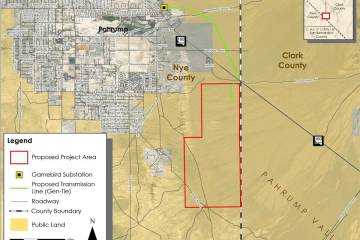
Town Board Chair Carolyn Allen opened the meeting with an overview of major solar projects proposed or under review in the valley. She said nine projects are currently being tracked, including Rock Valley, Amargosa East, Silver Star, Whisper, Echo Dune and Amber, and noted that the arrival of Greenlink West transmission infrastructure has made the valley increasingly attractive to developers.
“We are a target for the developers,” Allen said. “We’re cheap land, open land, and the transmission lines are coming in.”
Conservancy outlines proposal
Mason Voehl, executive director of the Amargosa Conservancy, presented the proposed Ash Meadows National Conservation Area (NCA), which would encompass approximately 182,000 acres of Bureau of Land Management (BLM) land surrounding Ash Meadows.
Voehl said the proposal emerged from several years of concern over mining exploration, large-scale solar projects and the long-term health of the region’s groundwater system.
Voehl said the proposal is intended to help protect the region’s groundwater from increasing pressure created by mining and solar power development. He emphasized that the conservation area would apply only to public lands.
According to Voehl, the proposed NCA would remain under BLM management and would not affect private property ownership. Voehl emphasized that uses such as hunting, grazing, rockhounding, hiking and off-highway vehicle recreation would continue.
“The goal is not to lock up public lands,” he said. “The goal is to conserve important resources while maintaining public access.”
Mandi Campbell, a member of the Timbisha Shoshone community, spoke in favor of the proposal, describing her lifelong connection to the area and concern about increasing industrial development.
Campbell said she grew up visiting springs and historic sites throughout the region and believes stronger protections are needed to preserve the landscape for future generations.
“I don’t want to see solar. I don’t want to see data centers,” Campbell said. “I’m fighting for the generations to come so that they can enjoy this land the way I did.”
Opponents question process and federal oversight
Several residents expressed concerns that a new conservation designation could eventually result in increased federal control over land and access.
Much of the public comment centered on criticism of the proposal and the Town Board’s earlier endorsement of the conservation concept.
Amargosa resident Emma Velador questioned whether residents had been given adequate opportunity to review the proposal before local governments expressed support.
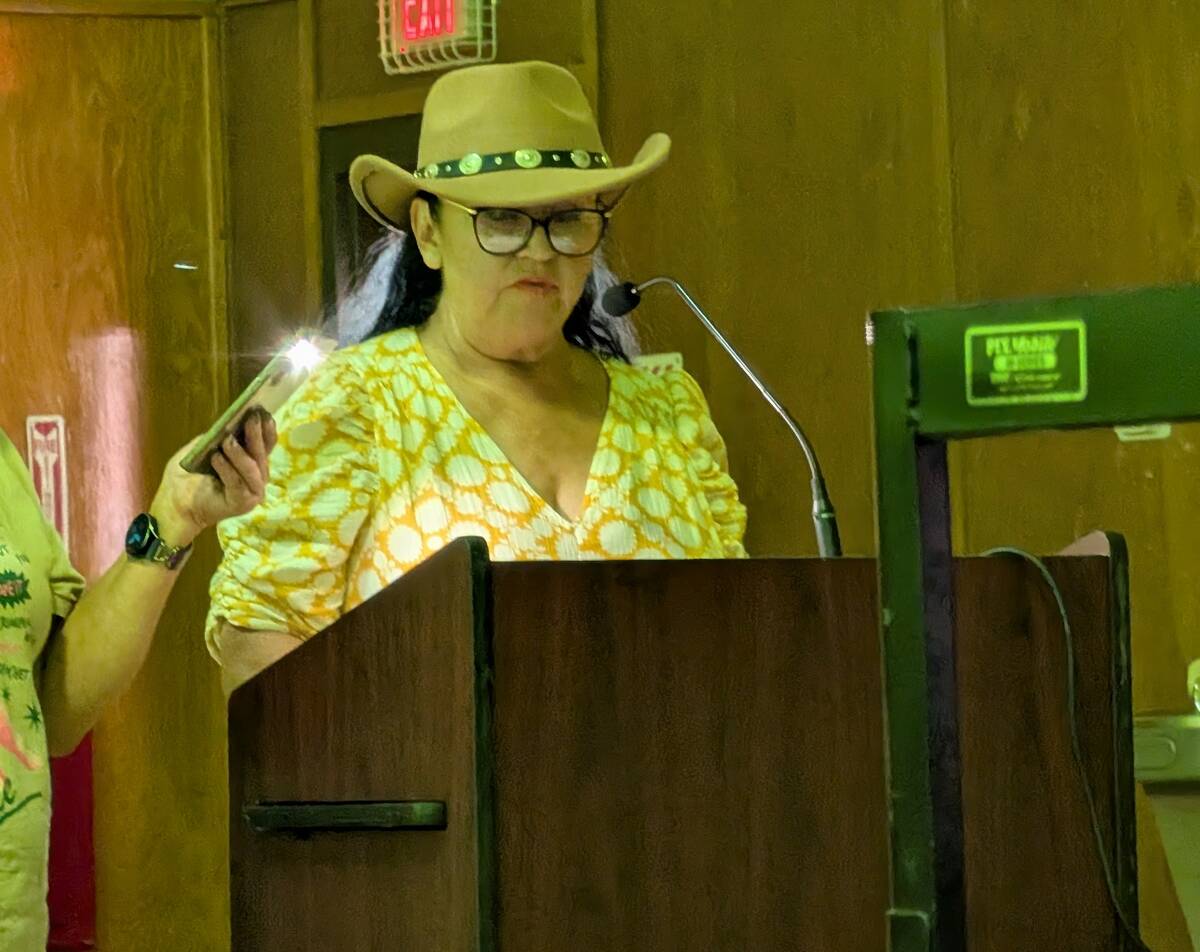
“We request a total reversal of the May 5 decision due to a lack of public scoping and public non participation,” Velador said while reading from a letter previously submitted to local officials.
Velador also noted that the proposal maps had improperly included private property.
“The current proposed mapping erroneously encompasses hundreds of private properties,” she said. “The Conservancy must rectify outstanding grievances with current inhabitants before seeking additional territory.”
The Board responded that they had endorsed only the concept of a conservation area, not a final map.
Others worried that future management changes could affect roads, recreational access and local decision-making.
Ed Goedhart, general manager of Ponderosa Dairy and a former Amargosa advisory board member, argued that existing environmental laws already regulate development on public lands.
“We don’t need another designation to protect that ground or the water,” Goedhart said.
Goedhart also expressed concern that expanding federal oversight could gradually reduce local control and public access.
“I think we can handle our business better than the federal government can,” he said.
Supporters cite development pressures
Supporters of the proposal argued that local governments have limited authority over projects proposed on federal land and that conservation status may be one of the few tools available to influence future land-use decisions.
Campground owner Brandon Schmidt said industrial development provides few lasting benefits to local residents.
“They take our water, they take our resources, and it provides nothing back to us,” Schmidt said.
Data centers discussed briefly
The meeting concluded with a brief discussion of potential future data centers and their possible impact on groundwater.
Jessica Kadrmas-Walthour urged caution, saying, “We don’t want our water to get worse. The whole point in the conservancy proposal is to protect our water.”
Not all speakers opposed the idea. Longtime resident Scott Harris argued that data centers vary significantly in design and resource use and should be evaluated individually.
“I don’t think we should automatically just say no,” Harris said. “We should absolutely do the research.”
Harris added that some facilities could provide permanent jobs and a stronger tax base for the community.
Discussion continues
No action was taken during the meeting.
Allen said the proposed National Conservation Area remains in its early stages and emphasized that maps, boundaries and management details will continue to evolve through public input and future discussions.
Thomas Hite is a freelance reporter living in Beatty.
This story is updated to reflect the correct spelling for Mason Voehl, executive director of the Amargosa Conservancy and Emma Velador, who is pictured in the photo. Mandi Campbell was incorrectly identified as a representative of the Timbisha Shoshone community. Additional quotes added to balance coverage to include those who oppose the expansion.