
Assemblymember Koenig: Faster federal permitting could unleash Nevada’s multi-billion dollar energy boom
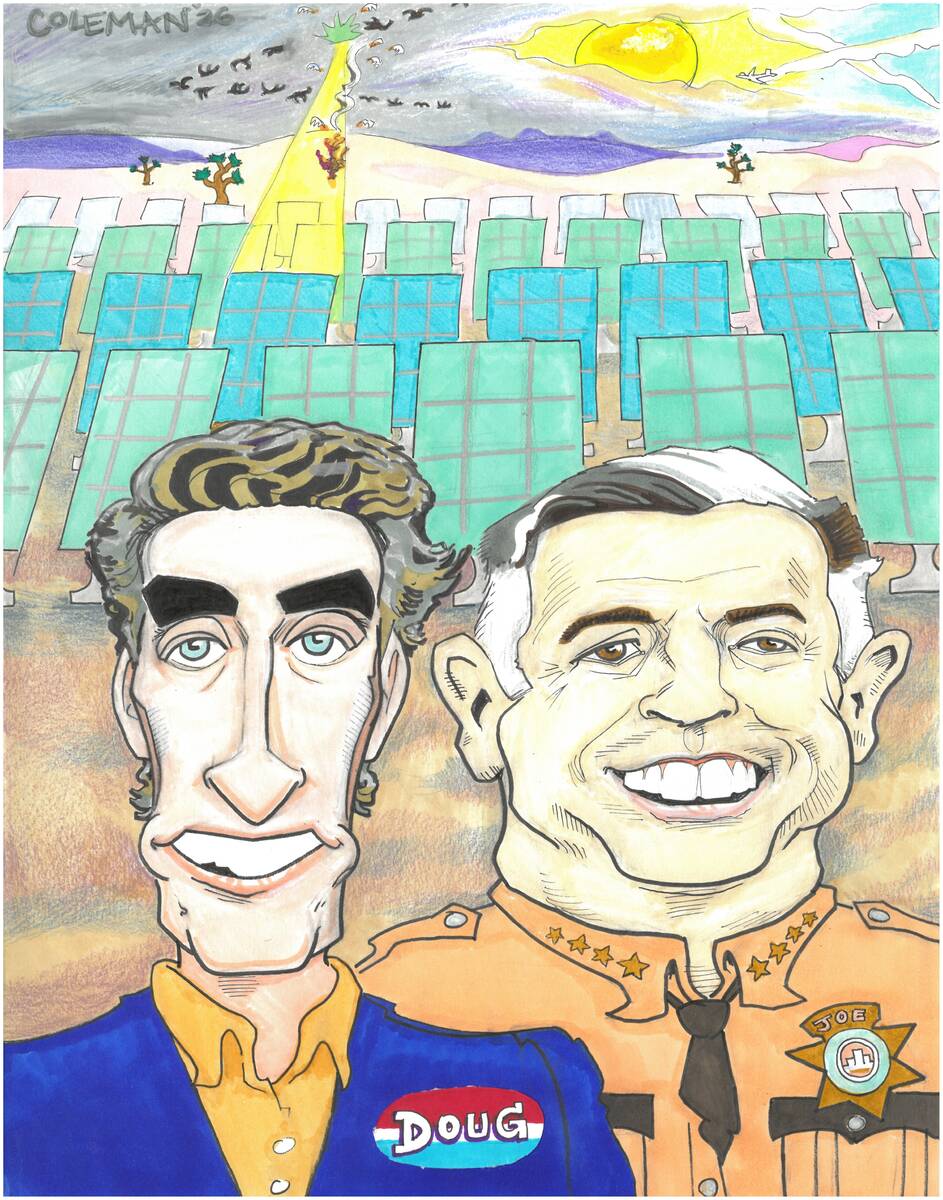



In the final days of 2025, the Trump administration quietly approved a major solar power and energy storage project on federal land in western Nevada. Despite the low-key rollout, it was really big news.
The $2.3 billion Libra Solar Project had been pulled aside for additional review by President Trump’s Interior Secretary Doug Burgum, raising fears that an important investment in Nevada’s energy infrastructure could be delayed indefinitely.
Thankfully, Nevada Governor Joe Lombardo worked with the Trump administration to keep the project moving through the final steps of the permitting process. Military veterans in the state of Nevada also supported the governor’s efforts.
“Solar energy development on federal land fuels Nevada’s economy,” Governor Lombardo wrote in a letter to Secretary Burgum last summer.
The Trump administration’s approval of the 700-megawatt solar and battery storage project will create around 1,000 construction jobs in rural Mineral County over the next two years.
For context, the $2.3 billion investment in Libra Solar is about the same amount of money that was spent building the Las Vegas Sphere. Put another way, in dollar terms, it’s on roughly the same scale as the new baseball stadium that’s being built for the Athletics.
But with continued leadership from Governor Lombardo and the U.S. Interior Department, Libra Solar could be the tip of a very big iceberg.
Nevada has at least nine more solar and storage projects caught up in different stages of federal review, including:
■ Boulder Solar III (Boulder City)
■ Dry Lake East (Clark County)
■ Lone Mountain Solar (Esmeralda County)
■ Nivloc Solar (Esmeralda County)
■ Smoky Valley Solar (Esmeralda County)
■ Red Ridge 1 Solar (Esmeralda County)
■ Red Ridge 2 Solar (Esmeralda County)
■ Esmeralda Energy Center (Esmeralda County)
■ Gold Dust Solar (Esmeralda County)
Taken together, these nine projects represent more than six gigawatts of solar power generation capacity and battery storage.
Using industry-wide cost estimates from the U.S. Energy Information Administration, these projects represent somewhere between $13 billion and $20 billion in construction activity.
For perspective, in dollar terms, that’s the equivalent of building another six to eight Las Vegas Spheres or baseball stadiums.
That’s a huge investment in Nevada’s energy infrastructure.
These projects will harness one of our state’s biggest advantages – abundant sunshine – and leverage state-of-the-art storage technology to allow solar power to be used in the late afternoon and evenings when electricity demand from homes and businesses is highest.
But it’s also a huge investment in rural Nevada, bringing construction jobs and expanding the property tax base for smaller communities in our state.
To be clear, this multi-billion dollar wave of investment depends on the U.S. Interior Department working constructively – pun intended – with Governor Lombardo and other Nevada officials to move these projects across the finish line of the federal permitting process.
You can’t blame the developers and supporters of these projects for being nervous.
As occurred with Libra Solar, officials in the Trump administration want to double-check any preliminary permitting decisions that were made during President Biden’s term related to these planned projects. And where they find problems that need to be fixed, or improvements that can be made, they should absolutely do so.
What should not happen – and in fairness, I do not think will happen – is delay for the sake of delay.
Like many other U.S. states, demand for electricity in Nevada is growing. We need investments in our power grid to keep up with rising demand and maintain reliability. And in Nevada, it only makes sense for large-scale solar and energy storage projects to be a big part of the solution.
Thankfully, the outcome for the Libra Solar Project is a strong signal that other major investments in Nevada’s energy infrastructure can and will move through the federal permitting process.
And when they do get approved, the economic impacts for the state economy will be something to behold.
Assemblymember Gregory S. Koenig is the Republican Assistant Minority Floor Leader North and represents District 38.