

The challenges in changing to agrivoltaics
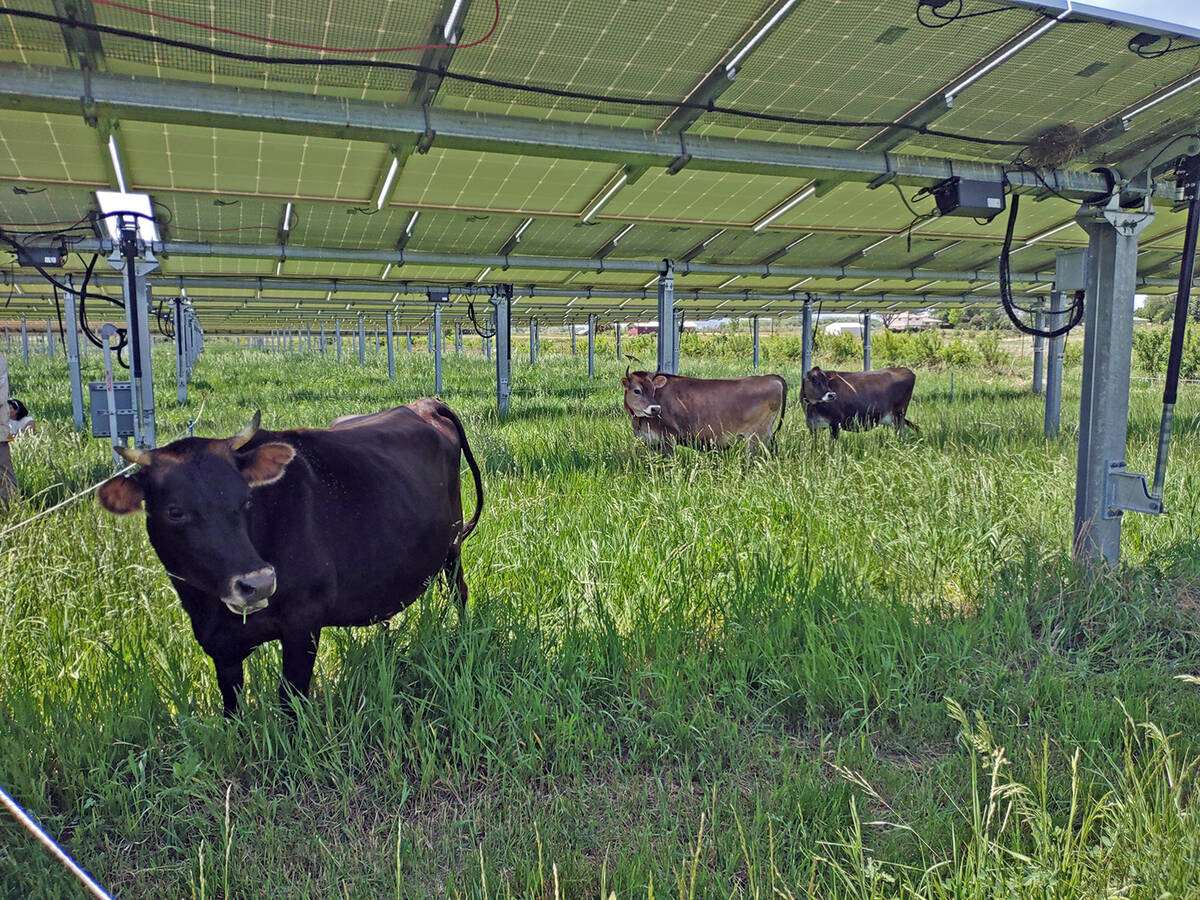
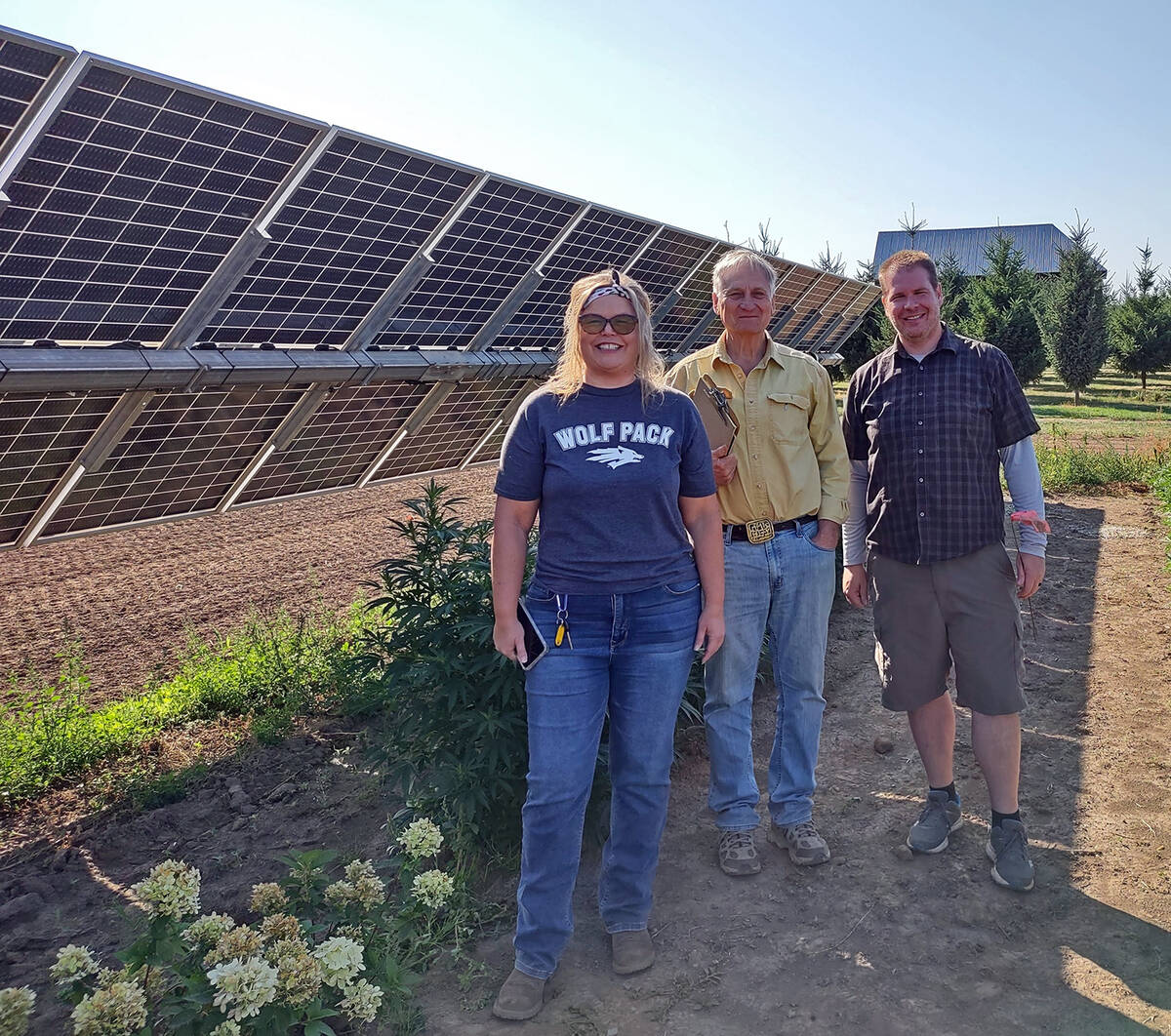
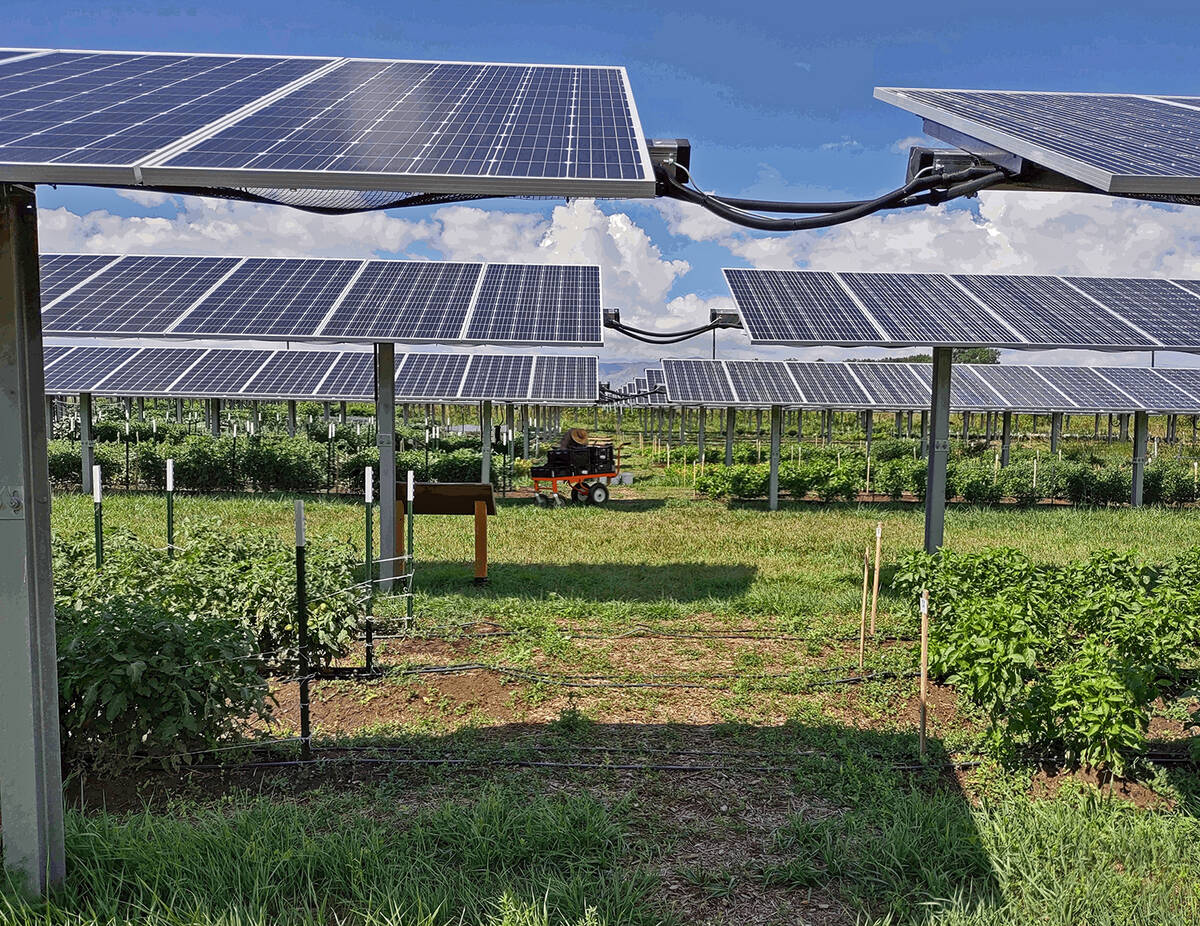




When discussing agrivoltaics, UNR Northern Nye County Cooperative Extension Educator Misha Allen’s passion for this promising alternative to the standard commercial solar facility is powerfully obvious. So too is her realism in approaching the subject.
Allen openly acknowledges that there are many challenges to be faced before agrivoltaics can become a mainstay in Nevada’s solar industry but that fact doesn’t dim her enthusiasm in the slightest. Through awareness and education on the benefits that can be reaped with agrivoltaics, she is hopeful that communities and developers alike will ultimately embrace this alternative model.
“I think the biggest challenge to agrivoltaic systems, particularly in Nevada, is that we really have been single-priority, traditional-solar focused. So those developers would need to change their business model and their operational management, the daily practices, because you’re having to actually work the soil in these types of systems,” Allen told the Pahrump Valley Times. “You need to be able to prevent soil compaction because that’s the quickest killer of healthy soil — you need to be able to protect that soil and increase the soil health.
“But companies already put a lot of inputs and effort into keeping that land bare, so it’s really just taking those inputs and changing them so they look different, because you’re now farming and producing on the land instead than fighting against what’s natural,” she continued.
Another major challenge in terms of getting developers on board with the agrivoltaics model comes down to one of the most common considerations of all — start-up costs.
“The requirements for agrivoltaic construction are different in comparison to traditional solar,” Allen stated. “You need more steel to elevate the panels and you’re also spacing them out a bit more, so it can be more expensive at the start. But then there is an approximately 10% increase in panel efficiency at agrivoltaic sites, which would offset that construction cost in the long run.”
If Nevada wants to see agrivoltaic systems in the state, there are ways to incentivize developers to incorporate this model into their projects, Allen noted.
“All around the U.S., there is a lot that’s going on. In places like Minnesota and Illinois, Wisconsin and then on the East Coast, they have done some really interesting work to discourage traditional solar and to encourage these types of creative, innovative, dual-use projects,” Allen detailed. “Ranking these kinds of projects by priority points and awarding higher points to multiple-use sites, for instance. So, it goes to show how legislation and government leadership can change how the development occurs.”
The first step in bringing agrivoltaics to Nevada is raising awareness about the option and shifting community opposition away from resistance toward the possibility of solutions.
“A lot of communities have been so focused on what they will not accept, rather than saying, this is what we want to encourage,” Allen remarked. “We’ve had so much opposition to these developments with very few solutions other than, well just don’t build it. And unfortunately, it’s not likely that the community’s just going to be able to make these stop. We’re moving toward more renewable energy as a country, they’re going to happen and if we can find ways to compromise, to remove some of those major concerns about environmental impacts or to provide the community with more benefits, then maybe it won’t be such a fight going forward.”
The topic of benefits is one area Allen is also working to solidify and she has come across a method that would make certain that the often-lauded benefits associated with commercial-scale solar development come to fruition, rather than becoming no more than unfulfilled promises.
“I have found a tool, it’s called a Community Benefit Agreement. This can help communities extract local benefits that, especially with these projects on public lands, are not captured in the traditional tax generation systems,” Allen explained. “These companies are getting these state tax abatements and really, it’s putting us in a hard spot to be able to support the industry when we’re not getting community infrastructure and development that would typically be associated with the tax generation of these systems… And then, there has just been a long history of unkept promises, leaving people feeling like it’s a sort of bait-and-switch going on.”
As examples, the handout cites sample provisions such as a requirement for developers to fund a specific dollar amount to identified community initiatives, create workforce programs or even provide a share of its revenue to the local government.
Community Benefit Agreements aren’t just good for the locale in which they are approved, either. They can also help smooth the way for solar developers in areas where these large photovoltaic facilities are opposed by members of the public. As the saying goes, time is money and any effort saved in fighting community resistance is bound to result in less development expense.
“A Community Benefit Agreement outlines how a project will function within a community and support its well-being,” an informational handout Allen put together explains. “It is co-created between a project owner and community representatives… This dynamic and engaging process guides the project’s community investment based on locally identified needs, garnering community support. Increasing community capacity and well-being cultivates supportive and responsive communities that contribute to a project’s bottom line.”
With many of the country’s existing agrivoltaic operations already taking the community-focused route, the combination of this model with a Community Benefit Agreement may just be the answer for towns like Pahrump, where intense industry interest has produced a buzz of staunch public pushback.
For more information on agrivoltaics or Community Benefit Agreements contact Allen at MishaA@UNR.edu or call 775-482-6794.
Contact reporter Robin Hebrock at rhebrock@pvtimes.com