
Tritium levels remain undetectable

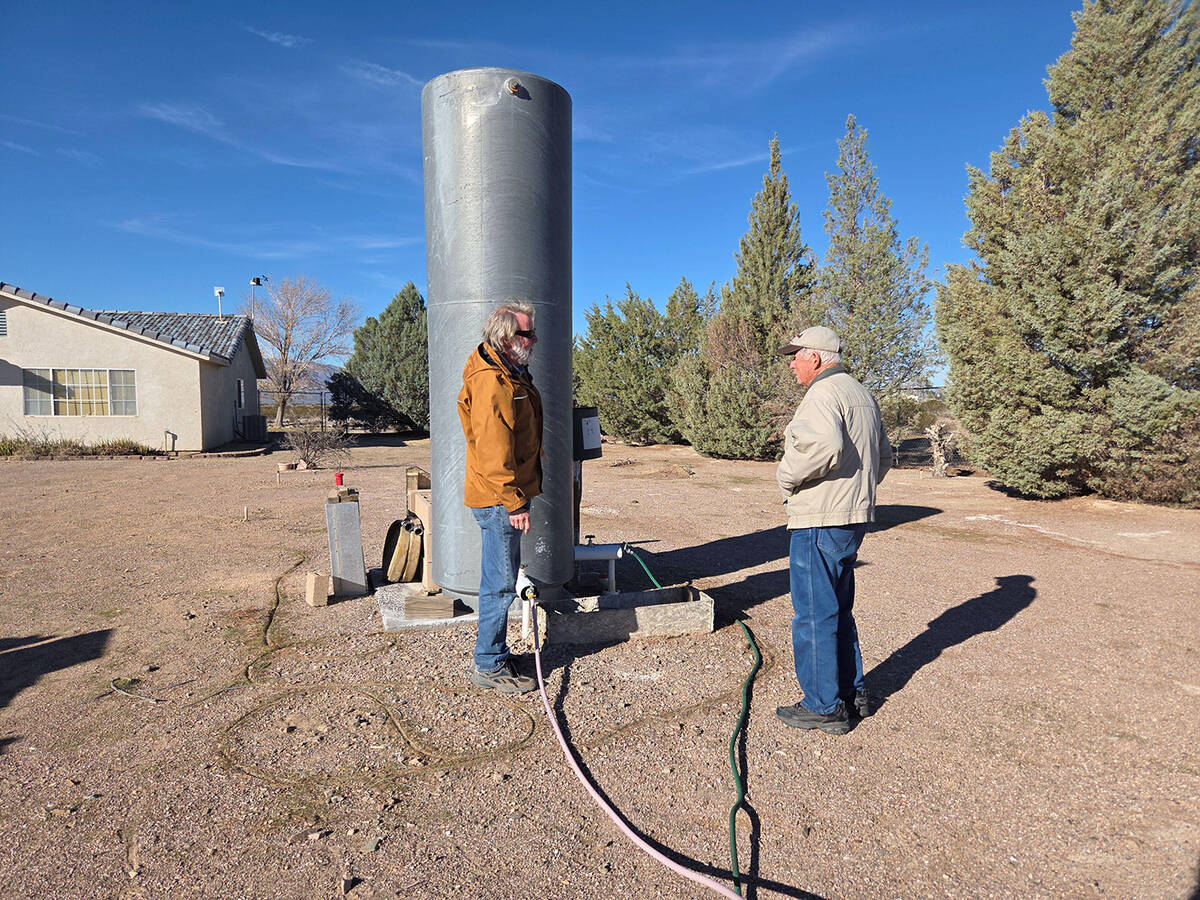




Between the years 1951 and 1992, there were a total of 100 atmospheric and 828 underground nuclear tests conducted on what was once known as Nevada Test Site and while these explosive experiments have since ceased, the concerns about resultant radioactive contamination have not.
One method that Nye County is utilizing to ensure that radioactive chemicals released by those nuclear tests are not making their way into public water sources is the Nye County Tritium Sampling and Monitoring Program (TSaMP).
Now in its 11th year, the TSaMP has consistently shown that levels of tritium, a key indicator of radioactive movement, have been undetectable and the results from the 2025 sampling proved no different.
Tritium levels remain below detectable limits, indicating that the waters downgradient of the former test site are free of radioactive contamination.
“The objective of the Nye County Tritium Sampling and Monitoring program, or TSaMP, is to verify, through independent methods, that tritium is not detected moving off the Nevada National Security Site (NNSS) and onto publicly accessible or private lands downgradient of areas formerly used for nuclear weapons testing,” Nye County Geoscientist John Klenke explained for the Pahrump Valley Times.
“This is achieved through a grant provided by the Department of Energy – Environmental Management, Nevada program to conduct tritium sampling and analysis,” he continued. “The program only samples off and downgradient of the NNSS, formerly known as the Nevada Test Site, which was renamed on August 23, 2010 to reflect the diversity of nuclear, energy and Homeland Security activities conducted on the site.”
The year 2025 was the 11th year of sampling under the 12-year grant, Klenke explained, noting that the grant only allowed for 11 years of sampling. However, the grant was recently extended by the U.S. Dept. of Energy through August 16, 2027, meaning Nye County will be able to squeeze in one more round of sampling in the last quarter of this year.
Tritium is a radioactive isotope of hydrogen, which is not highly dangerous in and of itself, as it would have to be ingested in large quantities. But it is highly mobile, with Klenke reporting that tritium becomes a constituent of a water molecule.
If a spike in tritium levels is ever detected, it could be a warning bell denoting the movement of other, more dangerous radioactive chemicals in the public’s drinking water.
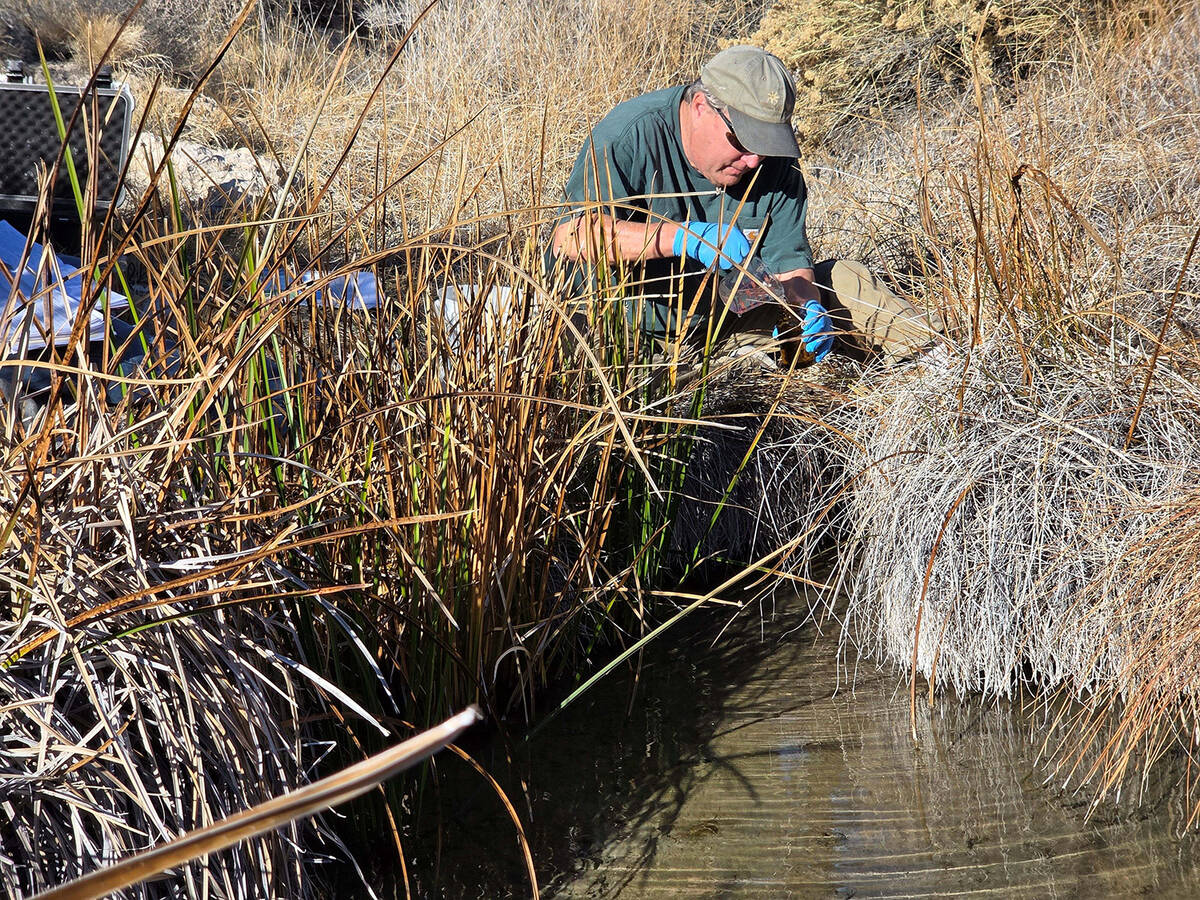
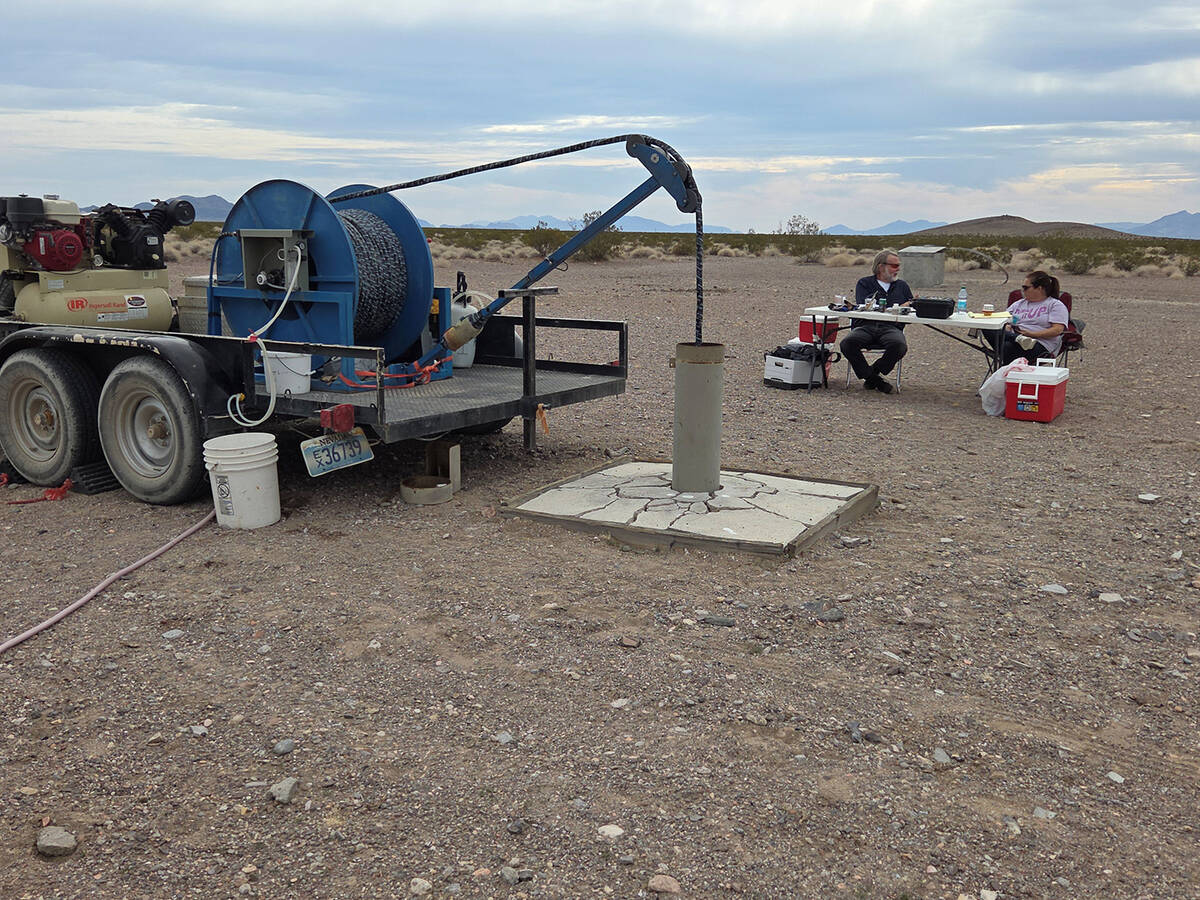
The 2025 program sampled 10 “core” locations, which include nine wells in one spring, plus an additional 10 select locations, which also include nine wells and one spring. These samples were taken between November 12 and December 17 last year and consist of samples from two Nye County Early Warning Drilling Program wells, three Nye County Groundwater Evaluation wells, two additional Nye County wells, three U.S. Dept. of Energy National Nuclear Security Administration Nevada Field Office wells, three community wells, five private wells and two private springs.
The samples were analyzed by Radiation Safety Engineering. Klenke noted that in addition to the samples themselves, five duplicates and five blanks were analyzed in order to meet quality assurance and quality control requirements.
“Results for all 20 samples plus the 10 quality assurance/quality control samples came back as non-detects,” he reported. “The 2025 samples were taken from the same general areas as in previous years, in the vicinity of Beatty, Amargosa Valley and Crystal, Nevada. Since its inception, the TSaMP program has sampled 88 unique locations, with all sample results being no detects. As well as the 10 core wells being sampled yearly, some wells were periodically resampled to confirm by using unenriched sampling methods, tritium levels have remained undetectable.”
Contact reporter Robin Hebrock at rhebrock@pvtimes.com