
Zombie Lot protesters demand change
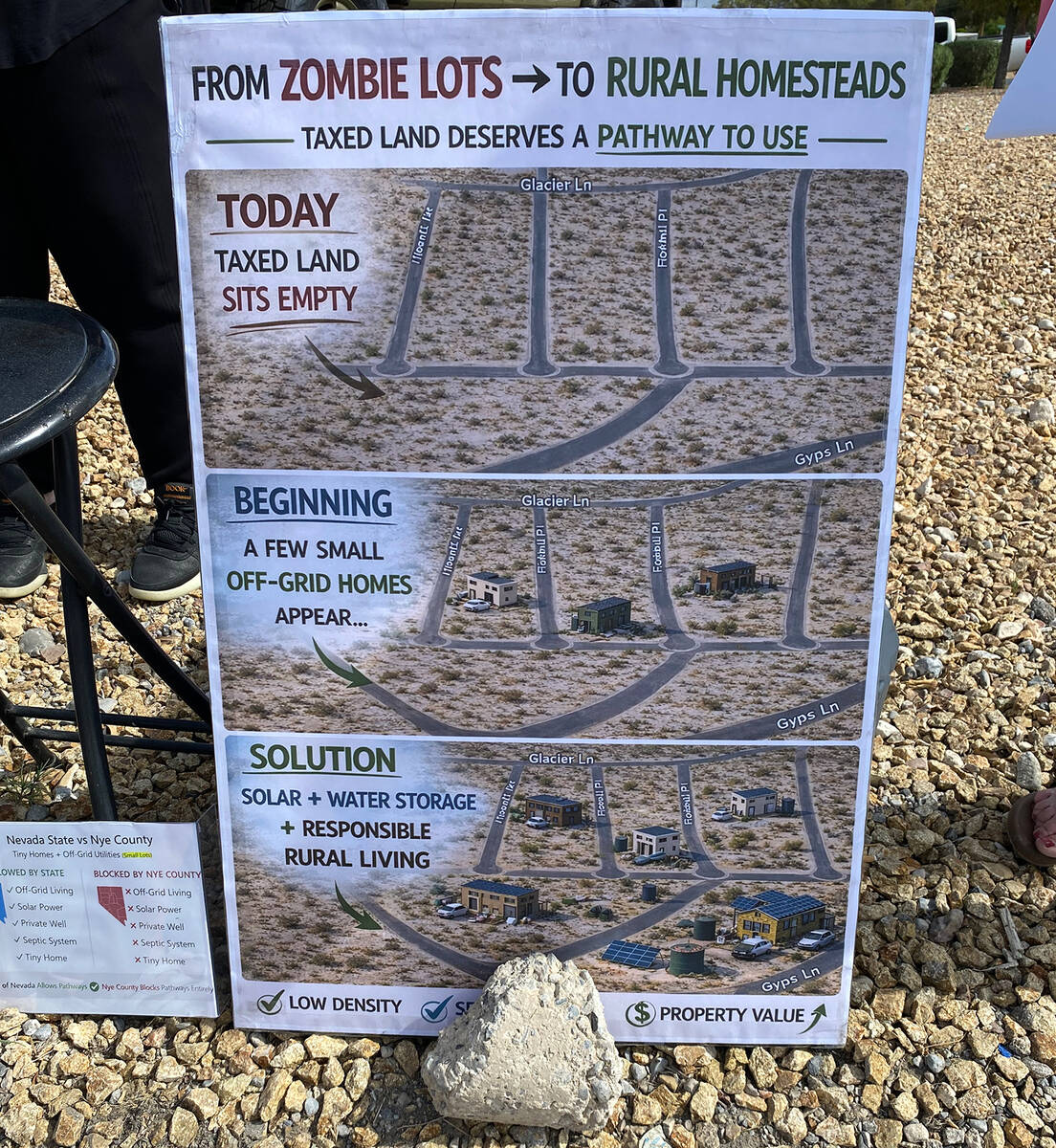





Many decades ago, the now-defunct Preferred Equities Corporation subdivided a 10,000-acre swathe of land in the Pahrump Valley and sold these properties with promises of infrastructure to come. But for thousands of the half-acre parcels that were created, water and sewer service has never been established, leaving them taxed and yet unbuildable – something that has become known locally as the “zombie lot crisis”.
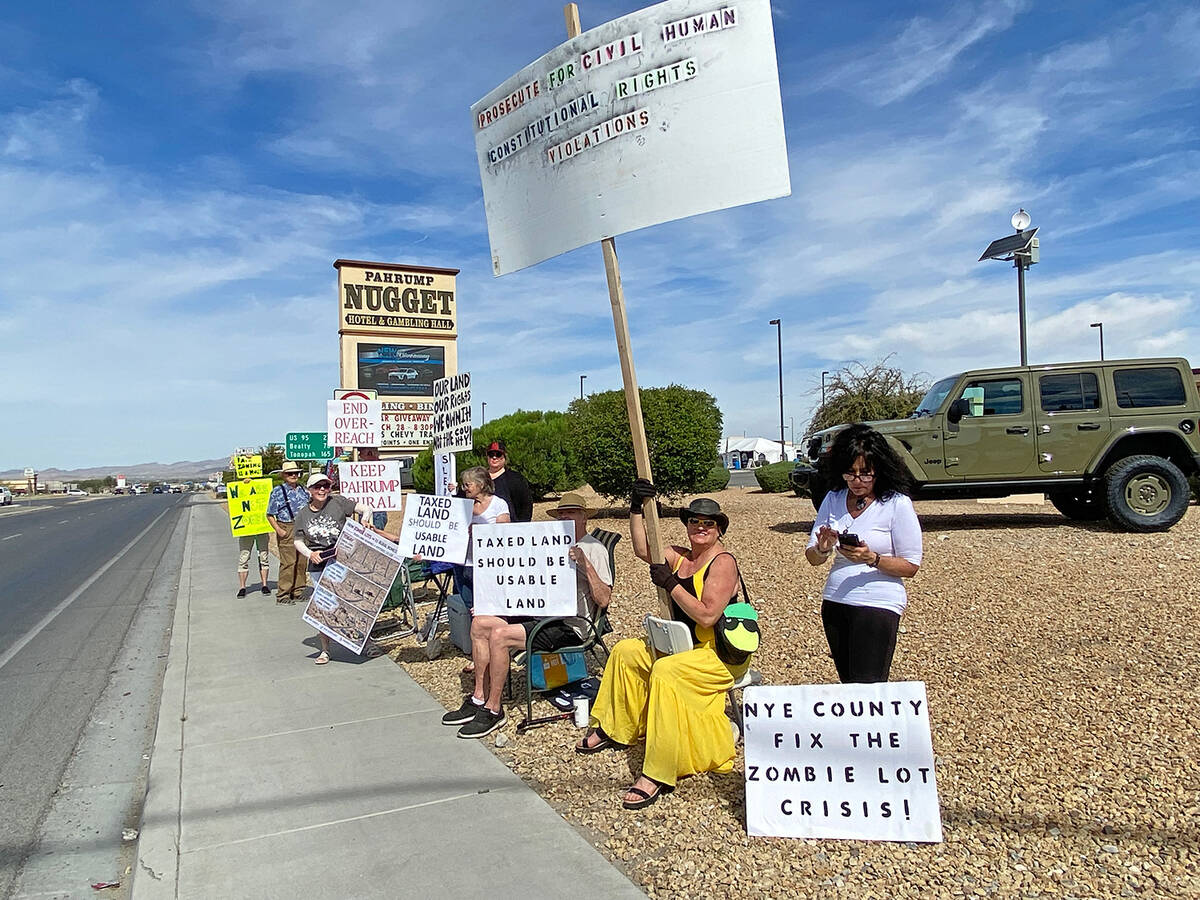
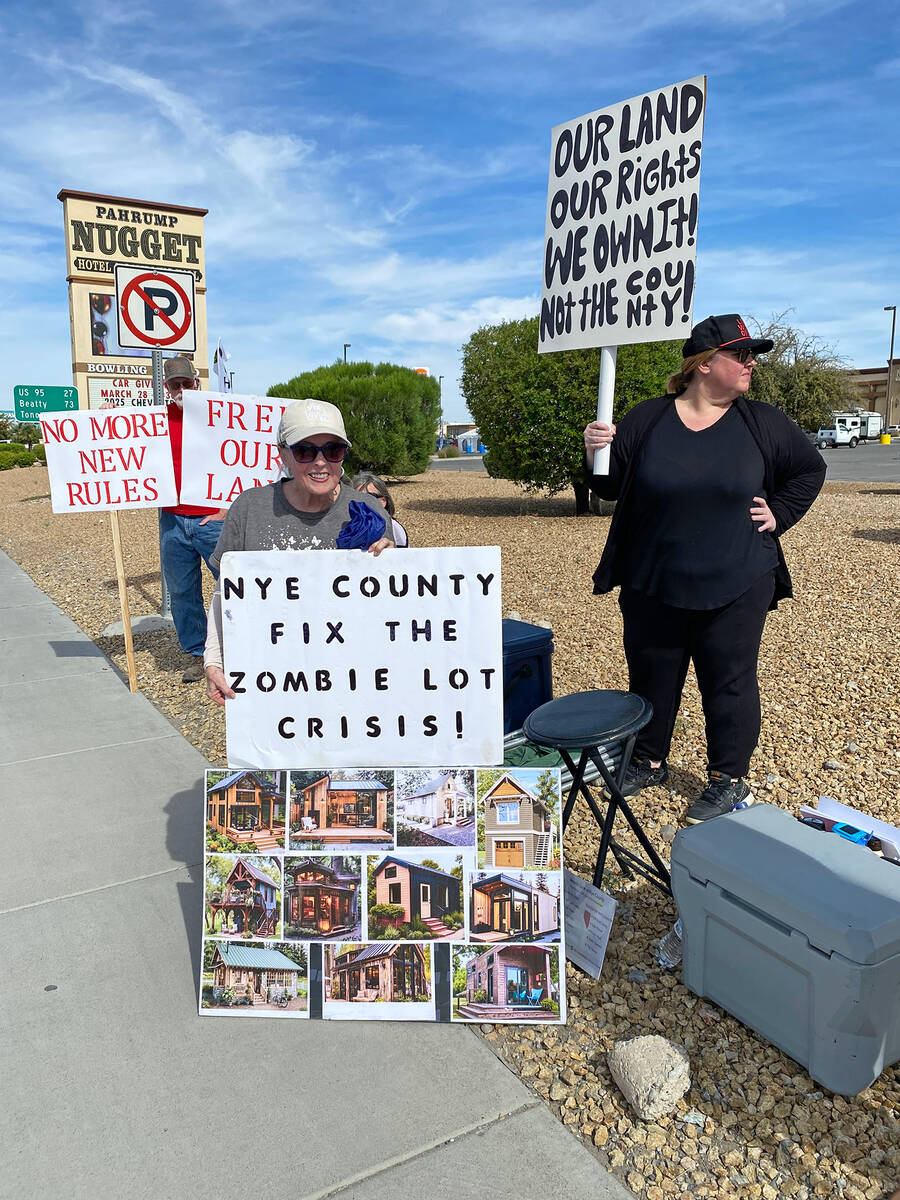
Taking to the street this past Saturday, March 21, the Pahrump Vacant Land Owners group hosted a Zombie Lot Protest to draw attention to the plight of these property owners and demand a path forward from local officials.
The protest took place at the corner of Highway 160 and Highway 372, ensuring maximum visibility for the roughly 15 to 20 protesters in attendance. Led by Pahrump Vacant Land Owners Lead Advocate Patricia Robb, the participants waved signs bearing phrases such as “Our land, our rights”, “Taxed land should be useable land” and “End overreach”.
Though a fairly small turnout, it was clear the protesters were passionate about pushing for answers to the restrictions barring them from building on their properties.
“I’ve done a lot of research and talked with a lot of people at a variety of entities, trying to find answers. And the state does not prohibit off-grid living,” Robb told the Pahrump Valley Times that morning.
Therein lies the primary issue – with these lots all half an acre or less in size, they cannot legally have both a domestic well and a septic system, per state law. Nye County’s Village Residential zoning, under which the majority of these lots fall, requires connection to a utility company’s water and sewer service. However, doing so is largely cost-prohibitive, ranging from hundreds of thousands to millions of dollars, depending on how far the lot is from existing utility infrastructure.
Knowing the financial hurdle is one that these property owners cannot make, Robb has proposed a new type of zoning. Dubbed “Super Conservation Lots” this zoning would allow for off-grid, alternative utility systems, such as composting or incinerator toilets and hauled water or atmospheric water generators.
“If they were to choose a pilot area, then at least we would have some people testing it out so they can prove systems like these work – because they do,” Robb asserted.
“I’m so tired of hearing them say they can’t do anything,” protester Lorraine Gilbert remarked. “It’s not like we want to live in some piecemeal tin shack. We’re not asking for that. We’re asking for viable solutions.”
“And the fact is, times have changed,” Robb noted. “Who would have thought that today, we’d be able to use something like a cell phone to reach somebody else on the other end of the world? Who would have thought there would be cars that could drive themselves? Times change and there are alternative utilities that the National Sanitation Foundation and the American National Sanitation Institute have agreed to. With engineered designs, they have actually approved these systems.”
Thus far, Nye County has maintained a stance of buyer beware when it comes to the zombie lots and emphasized that it does not believe that rezoning the lots will fix the issue. However, in September last year, the Nye County Water District established a working group that is focusing on the situation, with a report from the committee expected in the coming weeks. Look for coverage of that update in an upcoming edition of the Pahrump Valley Times.
Contact reporter Robin Hebrock at rhebrock@pvtimes.com
Zombie lot working group established
The growing concern surrounding what have become known as "zombie lots" led Nye County to examine the issue with a working group to focus specifically on providing a workable solution.
In September of last year, the Nye County Water district announced it was "seeking qualified and engaged residents to serve on the newly established Undeveloped Lot Working Group … to assist in identifying and developing recommendations for addressing parcels commonly referred to as 'zombie lots' – undeveloped properties that pose long-term challenges for infrastructure, planning and water resource management."