
Following the tracks of the wounded




Writers and storytellers often recall tales of spotting a magnificent animal at a great distance, planning a stalk and stealthily closing the distance. Ultimately, a single well-placed shot ends the hunt, with handshakes all around. This is often the case and defines “the perfect hunt.”
Anyone who has hunted extensively knows this is not always the case. Wounded game is a reality, not as pretty, but a reality that has defined the ethical hunter since time immemorial.
Tracking and retrieving differentiates the hunter from merely the shooter.
The margin of error, even with high-powered rifles, is narrow and following the tracks of a wounded animal is part of the necessary skill set.
As a game warden, I’ve assisted numerous hunters recover their animals, and on a few occasions have done it alone after an unethical hunter has walked away. These can become difficult and adrenalin-filled situations.
During one “interesting” situation, I found myself chest-high in water following the sound of a bear through a swampy area next to a river that had overflowed its banks. A wounded animal was abandoned by a “shooter” and I was responsible for its humane dispatch. I wondered, perhaps audibly, “What am I doing here?” If the bear chose revenge, which would be natural, he probably would have succeeded, as I couldn’t quickly maneuver in the deep water and thick brush. Yes, bears swim well. It was not a good situation, but necessary.
The bear rose up in front of me and in a few seconds, with an emptied 12-gauge shotgun, it was over. Half an hour later, as the adrenalin level subsided, my hand was shaking enough so that I had trouble lighting a match, that’s normal and natural too.
On another occasion it was my shot at a Stone Sheep that was not well-placed. A few inches low and a bit to the left, it entered his upper foreleg rather than his heart. It was a long shot, was across a ravine and he needed only a few steps to cross over the top of the ridge. I was sure he would be lying on the other side.
An hour later, after descending and ascending the rugged mountain terrain, I found him. He had run/limped full-tilt through a valley and was just crossing over the next ridge. I followed his trail from where I last saw him, but by nightfall he had continued to elude me. So, it was a cold night on the mountain wrapped in my poncho, with the sound of wolves in the distance. They were hunting too.
At daylight I continued over a ridge and found him bedded, he rose and took a few final steps on a stiffened leg. Then the work began as I packed the meat and hide and trekked the nine hours back to the Jeep and base camp. The wolves lost.
Another challenge that confronts a hunter is finding a well-shot animal that falls or swims into rough or bush-filled terrain. Due to their excellent ability to match the color of their surroundings, one can walk within a few steps of a downed prey and not detect it. These are often the most difficult to find in rocky areas where tracks and blood drops are few. This is also where a good dog is of great help, as they must have been to our hunting ancestors.
One of our well-known political figures tells the story of hunting deer with his wife. The shot was a bit far back and while mortally wounded, it ran into the thick brush and could be heard running a considerable distance. The couple followed, but lost its trail as darkness grew. The next morning they continued on the trail and with considerable tracking skill followed it before completely losing any sign of it at dusk on the second day. Day three, they pattern-searched the area and found the buck, but a cougar had found it first, ate portions, covered the rest and marked its territory.
This hunter’s perseverance and the partnership of his wife define the true character of a sportsman. This is my kind of public servant, a man of honor and perseverance; this is all too uncommon.
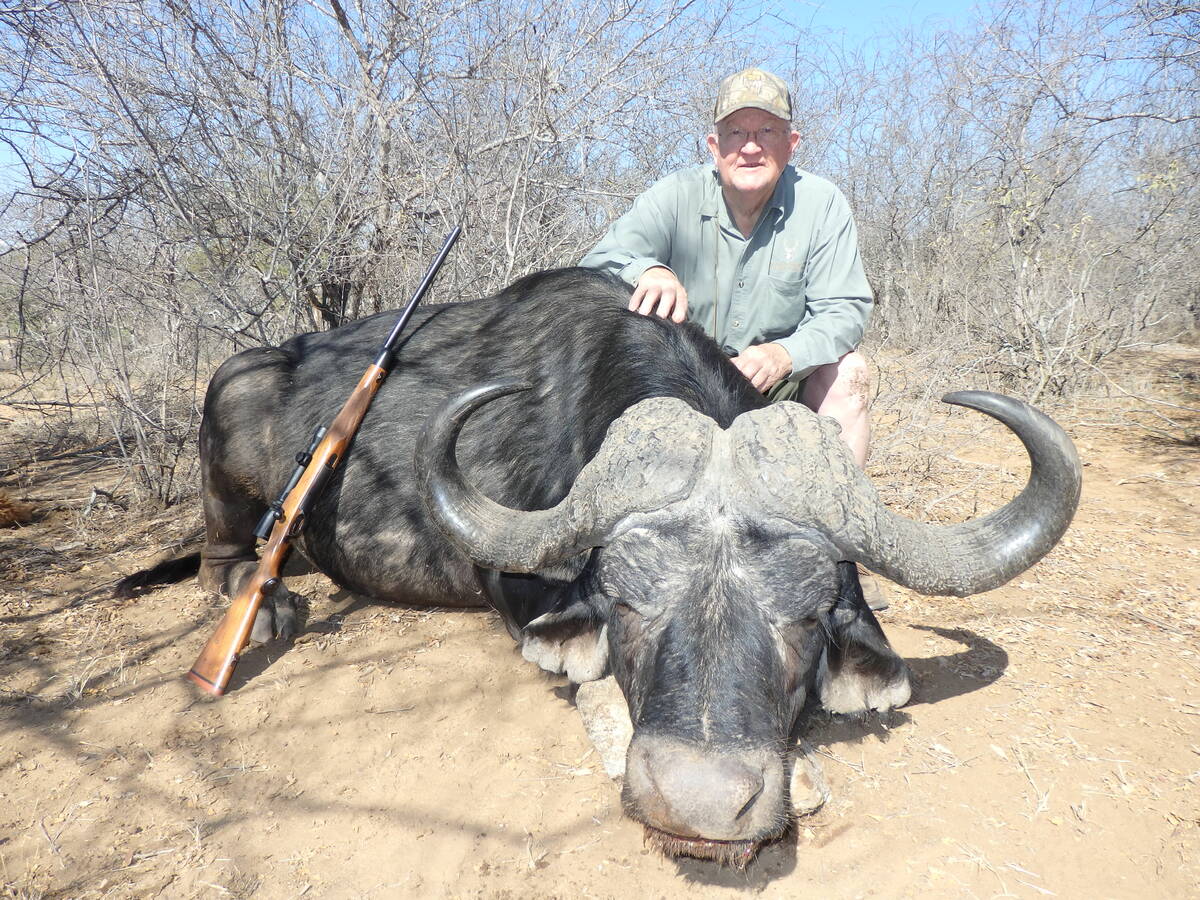
Finally there are the cases where the hunter becomes the hunted, and he doesn’t always win. This is most prevalent with big and dangerous game such as Cape Buffalo and lions of Africa, South American jaguars and North American bears, especially the grizzly bear, which is fearless and ferocious when cornered or wounded. All of these are termed “dangerous big game,” and have the capacity and history of hunting humans as a dietary supplement. I’ve had friends and acquaintances killed by all of these magnificent beasts.
I’ve also known people killed by wounded “dead” deer, elk and African antelope. The perceived “dead” ones are the most dangerous and their horns and antlers are truly spears.
Bottom line: all hunters have the obligation to hone their skills, both shooting and tracking. Every animal’s life is too valuable to waste. The historic and cultural axiom that our forefathers taught us is still a sportsman’s rule, “You shoot them, you clean them, and you eat them.” Or don’t shoot.
If you have a story or a comment, please e-mail dansimmons@sportsmansquest.org or visit sportsmansquest.org
As spears go, few can match that of a marlin or sailfish, which have also been known to charge a boat and do harm to any human that happens to get in the way.
They also use their spears to kill and feed on tuna, which are starting to appear on the southern California coast. To catch a fresh one I'm making plans for a San Diego trip out of H&M Landing, which has been landing big ones since the 1930s, a tradition hard to match.
Roast Tuna
■ 1½ pounds red-skinned or creamer potatoes, scrubbed and cut into bite-sized pieces
■ ¼ cup olive oil
■ 1½ pounds onions, cut into chunks
■ 3–4 sprigs thyme
■ one 2½-pound piece of tuna, 3 inches thick
■ coarse salt
■ freshly ground white pepper
■ black olive and anchovy butter, softened (see below)
Heat the oven to 400 degrees. Put the potatoes in a heavy roasting pan with the olive oil and season with salt and white pepper. Cook over medium-high heat, stirring occasionally until the potatoes start to caramelize, about 8 minutes. Add the onions and thyme, season with salt and pepper, and cook for 5 minutes; the onions will show signs of softening.
Meanwhile, tie the tuna in two places around its width with kitchen string so it will hold its shape. Season all over with salt and pepper. Reserve about 1 tablespoon of the butter and slather the rest over the top of the tuna.
Push the potatoes and onions to the sides of the roasting pan to make a space for the tuna. Add the reserved butter to the space, set the tuna on top and slide into the oven. Roast for 20 minutes. Baste with the butter. Let the tuna rest for 10 minutes on a carving board.
Remove string, cut the tuna into ½ inch slices, and serve with the potatoes and onions.
Black Olive and Anchovy Butter
■ 8 tablespoons (1 stick) unsalted butter, softened
■ 2 teaspoons store-bought black olive paste
■ 2 anchovy fillets, minced
■ 1 small garlic clove, minced to a paste or put through a press
■ 1 teaspoon grated lemon zest
Combine the butter, olive paste, anchovies, garlic, and lemon zest in a food processor. Process until light and fluffy. Pack into a small bowl and chill until firm. Note: prepare at least an hour ahead of time to let flavors develop.