
NPS and Caltrans restore Furnace Creek habitat
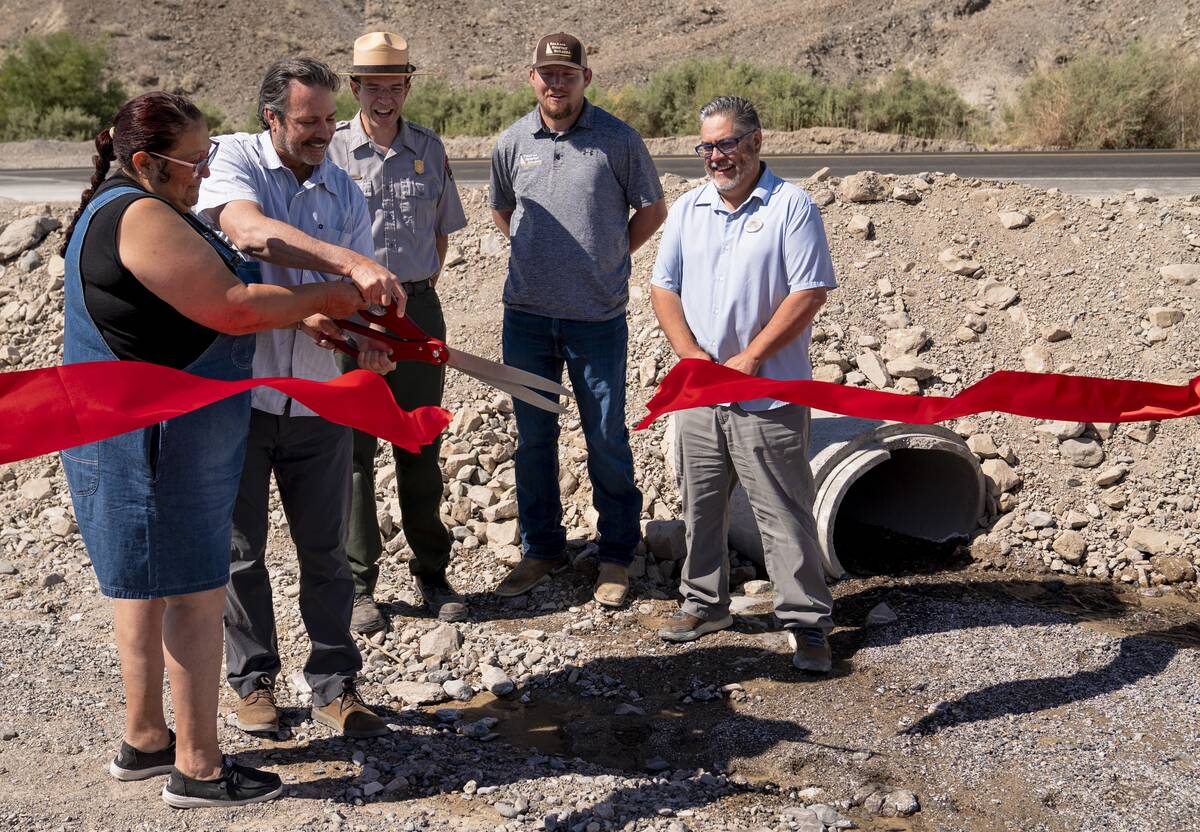





DEATH VALLEY — Furnace Creek, a stream in Death Valley National Park, is now flowing further in its natural channel, thanks to a recent project by California Department of Transportation (Caltrans).
The agency added three culverts under Highway 190 to improve driver safety by preventing water from ponding on the highway.
This project comes on the heels of a series of National Park Service projects to restore habitat for species endemic to the park’s waters. Species that only live in Furnace Creek and nearby waters in Death Valley National Park include:
Snails
■ Badwater snail (Assiminea infima)
■ Robust Ipnobius springsnail (Ipnobius robustus)
Crustaceans
■ Texas Springs amphipod (Hyalella muerta)
■ Travertine Springs amphipod (Hyalella sandra).
■ Two unnamed species of ostracodes, or ‘seed shrimp’
Insects
■ Furnace Creek riffle beetle (Microcylloepus formicoideus)
■ Nevares Spring naucorid bug (Ambrysus funebris)
Traditionally, Furnace Creek provided nourishment to the Timbisha Shoshone Tribe. The stream was a notable landmark for travelers, who named it ‘Furnace Creek’ in 1860 because of a furnace abandoned on its banks.
In the early 2000s, Death Valley National Park visitors would ask, “Where is the creek?” because Furnace Creek was about 20% of its historic length, due to development of the springs for drinking water and landscaping use.
In 2008, the National Park Service (NPS) stopped collecting drinking water from Travertine Spring and Texas Spring. Wells now provide water for the residents, hotels and campgrounds in the Furnace Creek area. The NPS removed the spring boxes and Furnace Creek increased in flow. The next restoration effort was removal of non-native palm trees, each one of which can use 200 gallons of water per day.
As Furnace Creek returned, it started running over CA-190, creating a driving hazard. The culverts installed recently eliminate this safety hazard and allow Furnace Creek to return to its former streambed, restoring critical habitat.
Death Valley National Park is the homeland of the Timbisha Shoshone and preserves natural resources, cultural resources, exceptional wilderness, scenery, and learning experiences within the nation’s largest conserved desert landscape and some of the most extreme climate and topographic conditions on the planet. To learn more, visit Learn more at nps.gov/deva.