

DCFS is focusing its summer on foster dad recruitment
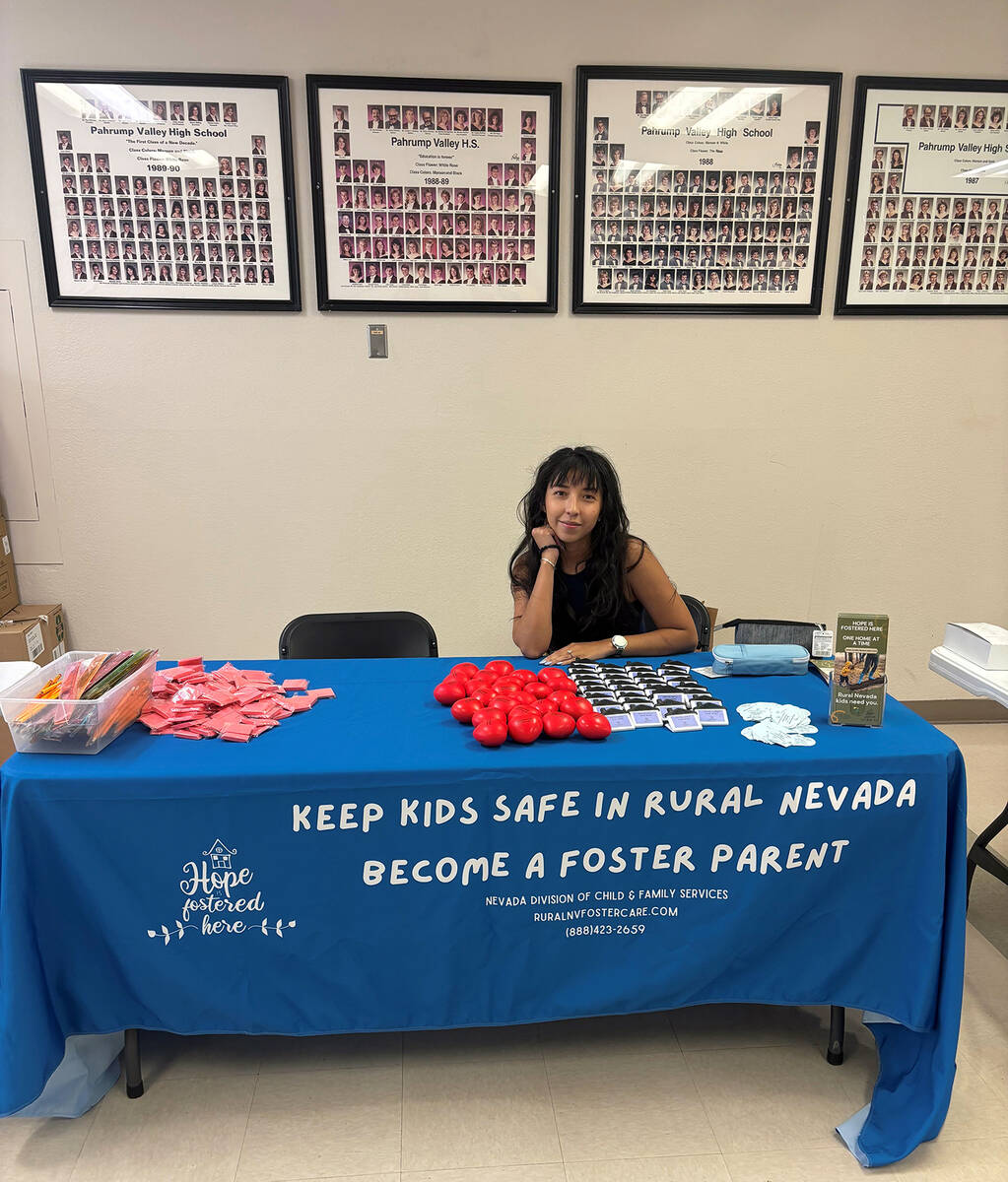


With the number of foster youth continuously outpacing the number of available foster homes in rural Nevada, the Dept. of Child and Family Services (DCFS) is constantly striving to add foster care providers to its ranks and this summer, the focus is on inspiring men to help fill the need.
Perla Landa-Munoz, DCFS Rural Foster Care Recruiter for Nye County, was in town last week to spread this message and she sat down with the Pahrump Valley Times on Monday, July 20 to discuss the process and encourage people to consider becoming a much-needed foster family.
“Recently, we’ve kind of seen a shift in a lot of our rural regions, where males are the ones inquiring about how to become foster parents,” Landa-Munoz explained. “In the past, it was almost 100% women – usually moms, sometimes single women. Now we’ve seen a big push around men, calling in to learn about the process. They may be married, they may be unmarried, but they see there is a need and so we’re trying to lean into that and bring that energy to Nye County.”
Landa-Munoz said that a majority of the foster youth in the county at the moment are teenage boys, “So, we really want to see those male figures step up and take care of some of our teens. They have so much to offer, to show our kids who have maybe never had that type of father figure before – teaching them how to do everyday things, things with cars, different household things. That’s why we’re really pushing for that.”
One of the most important factors in the overall number of foster homes is the ability to provide a measure of stability for the child by keeping them in their own communities. However, the reality is that in cases where there is no available foster home locally, children must be moved to another town or city entirely, furthering the turmoil that they are already experiencing.
“That also makes it much more difficult when it comes to reunification for the child and their biological parent – with visitations, with court, with everything,” Landa-Munoz remarked.
As to the process itself, Landa-Munoz said it all starts with a phone call to her.
“We do a little inquiry and a background check, to make sure they qualify and then from there, we set our applicants up with a training. Our trainings are all virtual,” Landa-Munoz detailed. “It’s a total 18 hours and they are in the evenings during the week. They are very accessible and interactive. People learn a lot from these trainings.
After that, your licensing worker would reach out and schedule interviews, a home visit and a home study,” she continued. “For the interviews, they are pretty extensive. We want to know about your background, where you came from, just making sure the applicants are ready to take on the responsibility and have the lifestyle to be able to take in a foster kid. At the home visit, we go over some basic requirements, some safety requirements in the home, that are required for licensing. Then your licensing worker writes up your home study, which is required for all foster care and adoption. It’s basically a comprehensive assessment of everything discussed in the interviews and the home visit. That’s when you become officially licensed and you go onto a vacancy list.”
When it comes to placements, Landa-Munoz stressed that foster parents do not have to accept all types of foster children. Instead, the system is designed for flexibility. For example, foster care providers can specify age ranges they are comfortable with.
“We encourage our applicants to be very open and honest about that. I understand that there are people who are up to taking in anyone but if you may not have experience with, say, teenagers or young babies, that’s perfectly fine,” she said. “If you don’t feel you are prepared to take something like that on, you’re not doing yourself a favor or the child a favor. And later on, as you gain experience, we can always change that. The licenses are also specific to if you want to take in boys or girls or both and they can be for emergency placements, short-term placements or long-term placements.”
People from all walks of life are welcome to become fosters, too, with Landa-Munoz stressing, “The more diversity we can get, the better. You don’t have to be a parent yourself, you don’t have to be married, you don’t need to own your own home. You just have to pass a background check, have a room for the foster child, an income that sustains your everyday life and be 21 years or older.”
For those who may not feel they can take on the role of a foster care provider, there are still many ways to help foster youth without offering housing.
“Talk to your community about the need for foster families. If you’re part of a church or other organization, maybe bring it up to them,” Landa-Munoz encouraged. “Or reach out to me and I can come and talk to your group. We also work closely with groups like ACORN [Advocates for Children of Rural Nevada], so if you want to become a volunteer advocate, that would be amazing. If you want to host a supply drive, for backpacks, clothes, different things like that, so social services have it ready when kids come into care, that is extremely helpful. There are a lot of things you can do to help.”
For more information on how to become a foster parent or assist in another way, call 888-423-2659, email FosterCare@DCFS.NV.gov or visit RuralNVFosterCare.com
Contact reporter Robin Hebrock at rhebrock@pvtimes.com