
Pahrump Flock camera ban fails to move forward
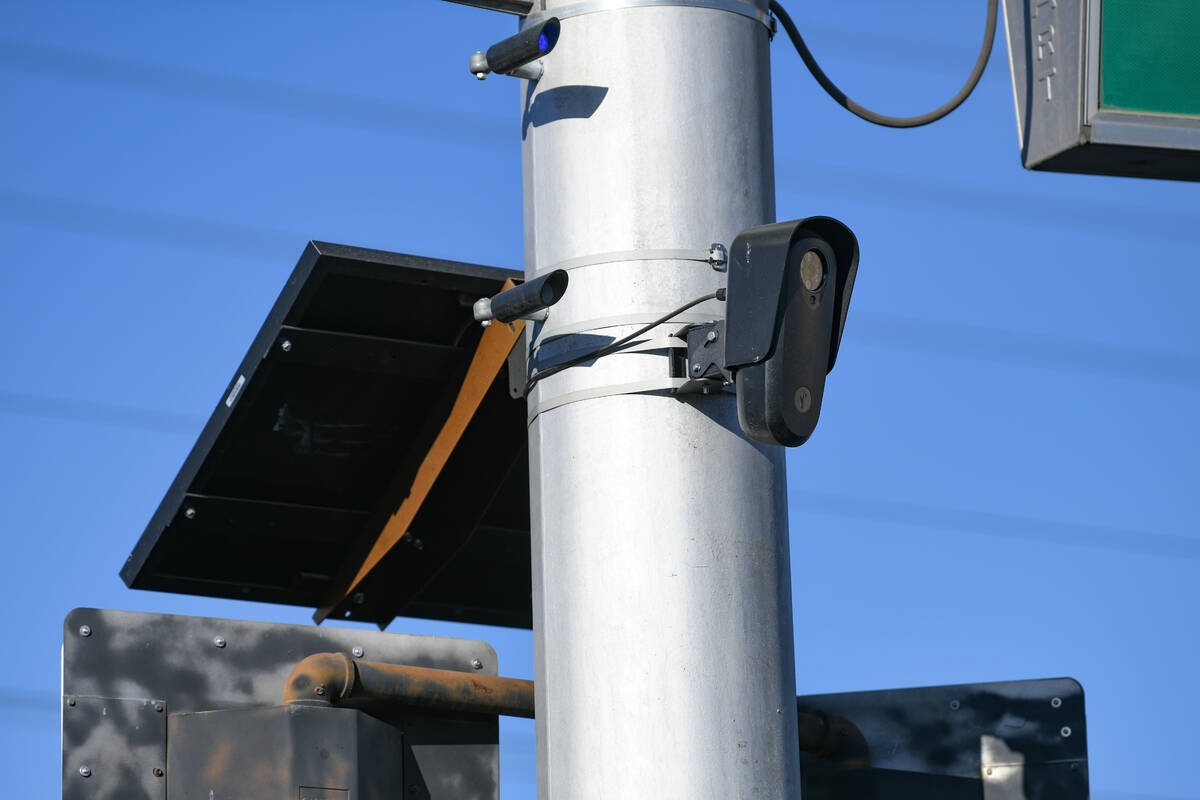




The subject of Flock cameras has been drawing local attention in recent weeks and with plenty of public angst on social media over these automated license plate readers (ALPRs), Nye County Commissioner Ian Bayne put forward a bill to ban the governmental use of this technology in Pahrump.
However, after a round of public comment and debate between commissioners and law enforcement officials, the ban did not move forward. The motion to reject the ban and the motion to approve it both failed to garner a second.
The “Flock” camera ban was addressed at the commission’s Tuesday, Sept. 15 meeting, with Bayne explaining that one of the reasons he had left Chicago, Illinois was to get away from technology such as speed and red-light cameras.
“What this would ban are two things – Flock cameras or automated license plate readers that are fixed and… any county jurisdiction/agency use of the data,” Bayne stated.
He noted that the ban would not apply to mobile license plate readers before telling the board, “I’m just against these things. I don’t want to be spied on, I don’t want there to be a database so we can just type in and figure out where everybody is. And that’s why I put this together.”
Public comment on the subject was mixed, with some speakers favoring a ban while others felt the technology could be beneficial in certain cases.
“It makes no sense to cut such a great crime-fighting tool,” resident William Grubel asserted. “We do need administrative procedures to protect the information to lawful uses but we do not need to get rid of these things.”
He and resident Nancy Yanda agreed that they felt ALPRs could be useful in areas such as the local parks or at intersections where speeding is common.
Resident Tim Bohannon then cited the Rockwell song with famous lyrics sung by Michael Jackson, “Somebody’s Watching Me.”
“That’s the perception of the Flock cameras,” Bohannon remarked, adding that he believes that the county needs to be careful of protecting the Fourth Amendment. “Does this impede that? It could. It really depends on where the data is going. There is managing the data and being someone who does that on a daily basis, sometimes it can get it the wrong hands – and there are a lot of bad actors out there.”
“I’m concerned about privacy,” resident Lisa Hemby stated, underscoring Bohannon’s point about public perception. “And I am against the mass data that these Flock cameras would collect, such as time stamps and location, which would create a searchable movement history… I don’t want to be in a jail, if you will, in my own car, in my own town.”
As for NCSO personnel, undersheriff Cory Fowles said he believes ALPRs are a good tool for law enforcement but he emphasized that NCSO does not operate or own any fixed ALPRs and does not have direct access to databases connected to Flock cameras.
“We don’t have the infrastructure for that,” Fowles stated, explaining that NCSO must contact the Southern Nevada Counter Terrorism Center’s Fusion Watch to request any information from an automated license plate reader.
Fowles said he shares the public’s privacy concerns and noted that this technology could very well end up banned by the Supreme Court in the future. As it stands today, there is a nationwide class action lawsuit against Flock Safety and a bill potentially going before the Nevada Legislature next year to address the use of these cameras.
When it came to commissioner Debra Strickland, she told her fellow board members that she was conflicted over the proposal, stating, “I don’t know if we’re ready for this at this time… I don’t know how I feel about it.”
“If this law passes right now, does it help you or harm you?” commission chair Ron Boskovich jumped in to ask, directing the question to Fowles.
“It maintains the status quo,” Fowles replied.
Following several more minutes of discussion and a clarification from Nye County District Attorney Brian Kunzi that the county cannot control private property or whether Flock cameras are used on state highways, Strickland made a motion to reject the ban.
With no second forthcoming, Bayne then made a motion to approve the ban. However, his motion also lacked a second and no action was taken.
Contact reporter Robin Hebrock at rhebrock@pvtimes.com