
ROOTED IN NEVADA: Choosing the tree that will go to DC
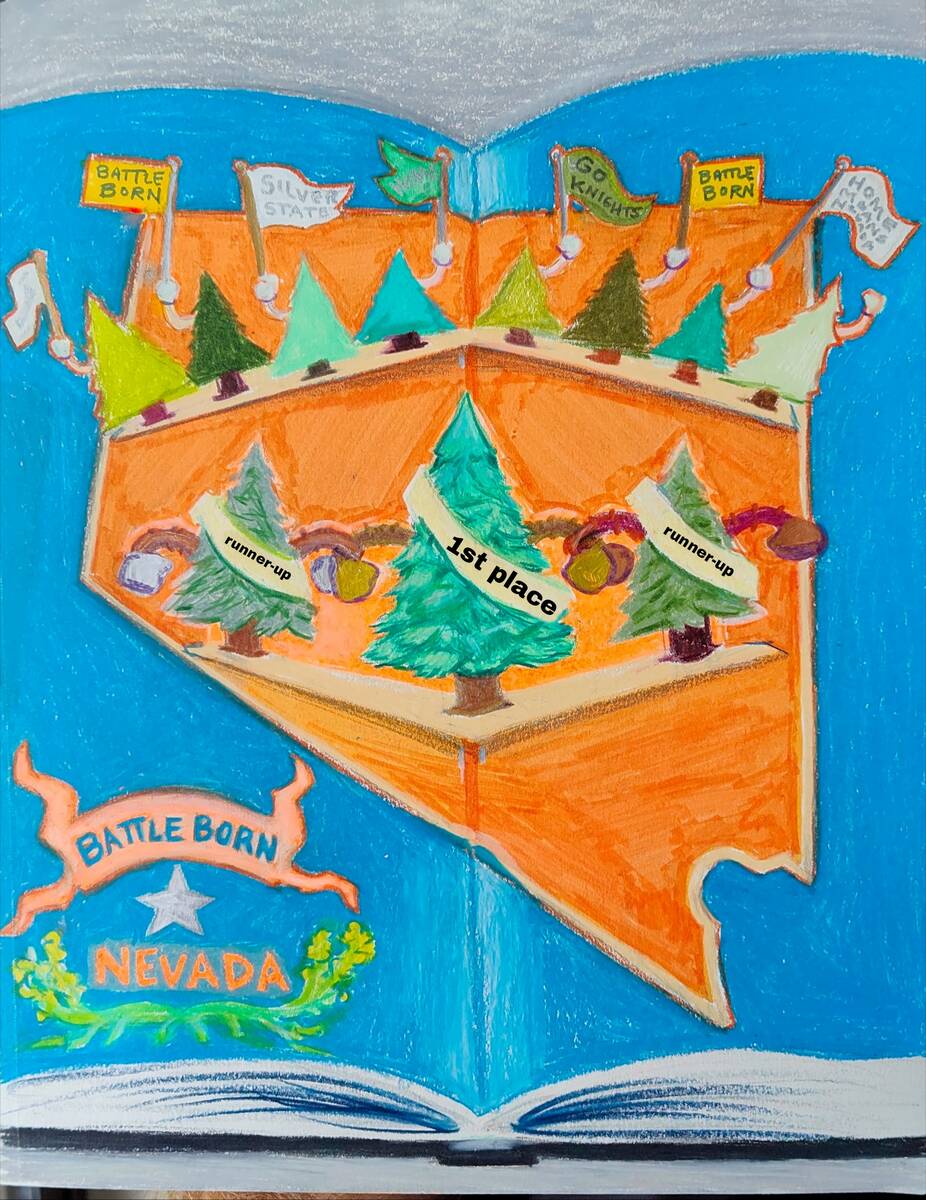

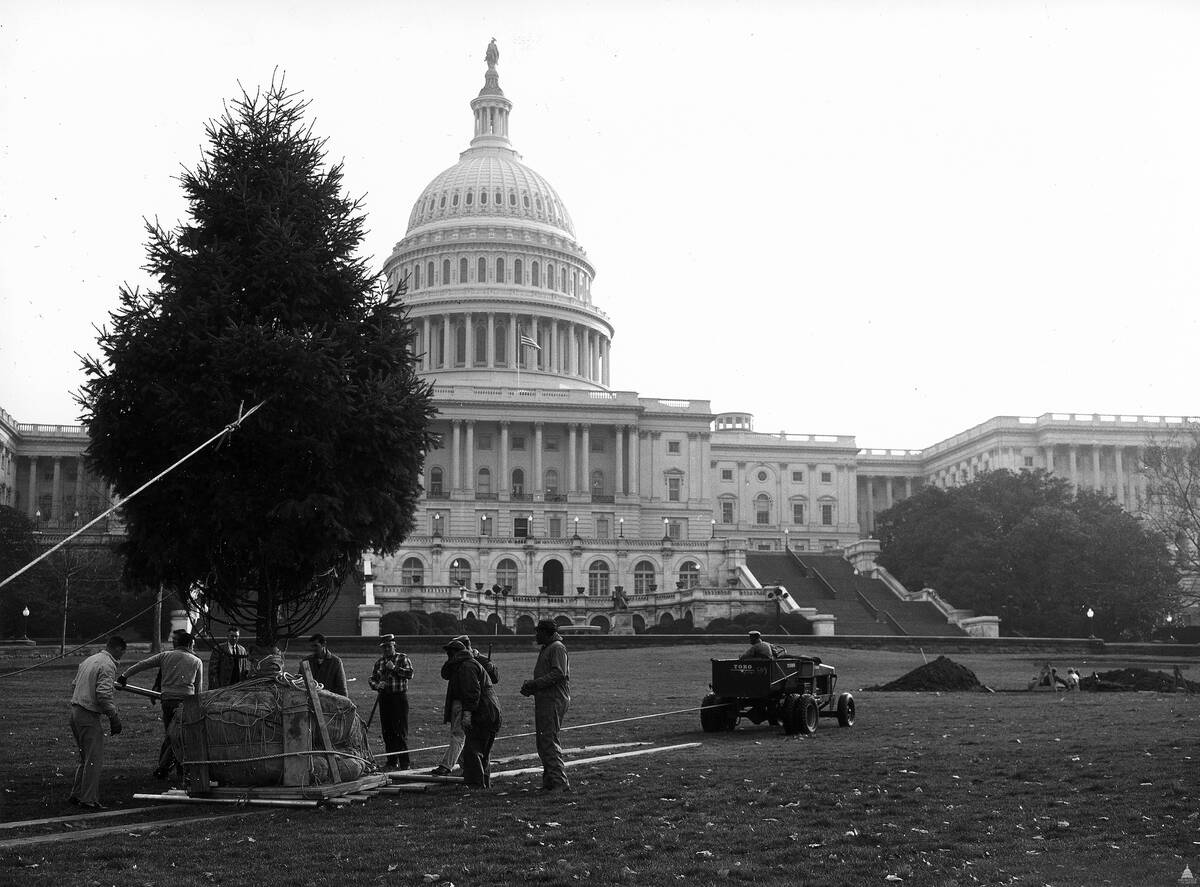
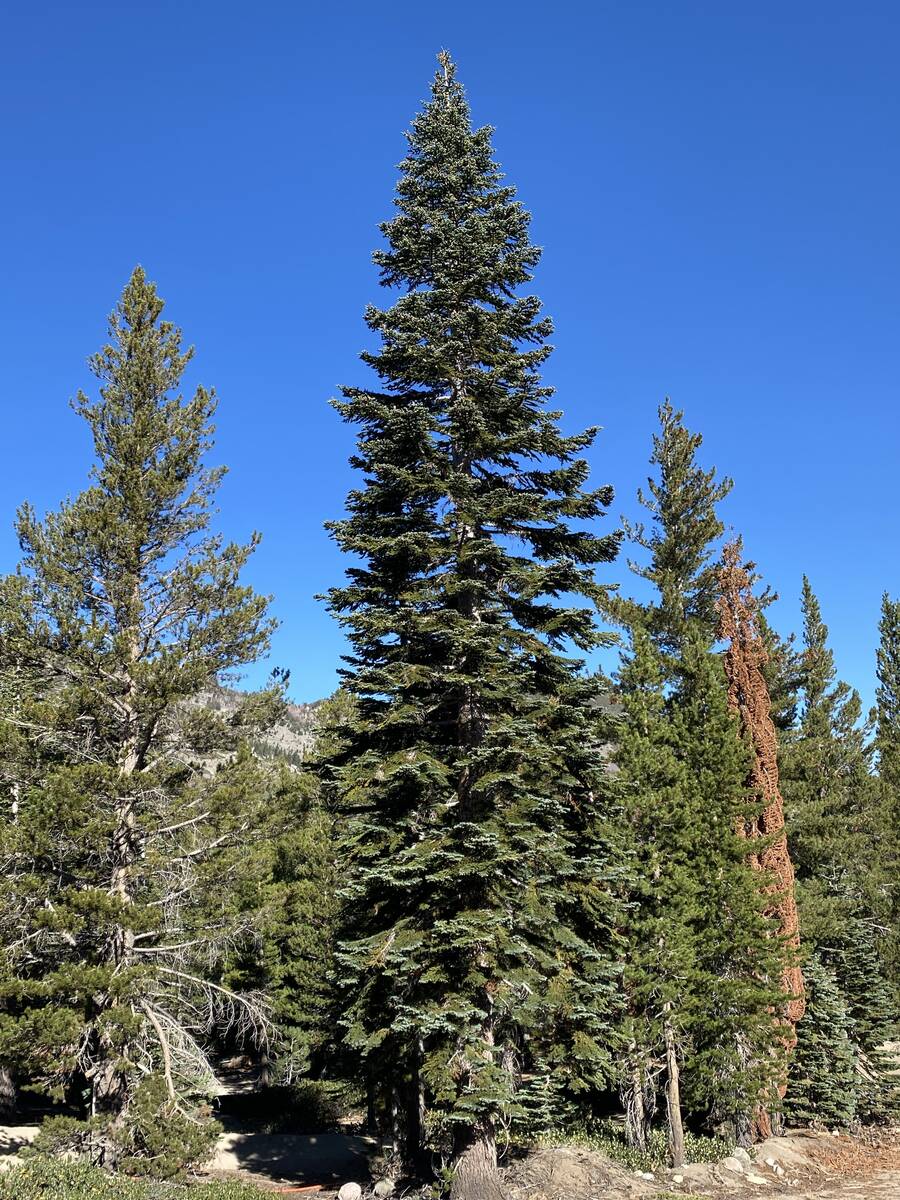
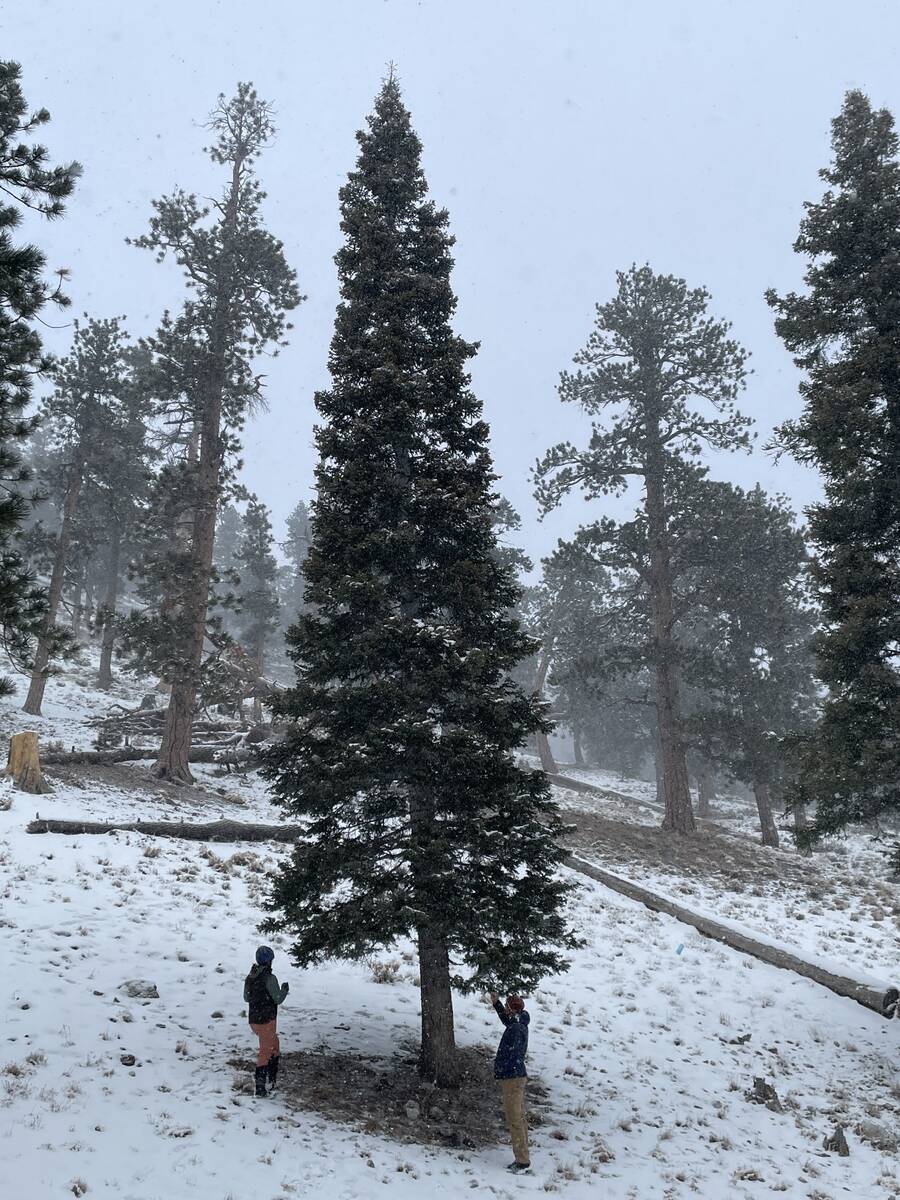







For the first time in history, Nevada will provide the U.S. Capitol Christmas Tree, a cherished holiday tradition dating back to 1964. Early in 2025, the U.S. Forest Service announced that this year’s tree will be harvested from the Humboldt-Toiyabe National Forest (HTNF), the largest in the continental United States, spanning 6.3 million acres across Nevada and a small portion of eastern California.
A tradition rooted in history
The Capitol Christmas Tree tradition began in 1964, when a live 24-foot Douglas fir from Pennsylvania was sent to the Capitol with the intention that it be permanently planted and redecorated annually, but it succumbed to wind and root damage in 1968.
Since 1970, the U.S. Forest Service has partnered with the agency of the Architect of the Capitol (AOC) each year to select a fresh tree from one of the nation’s 154 national forests.
To date, 24 states have contributed to the tradition, with Pennsylvania leading the count at six trees. California and Michigan follow closely with five each. Nevada now becomes the 25th state to join this prestigious list.
Funding and partnerships
“The U.S. Capitol Christmas Tree initiative (of harvest and delivery) is supported primarily by a mix of contributions from partners and sponsors,” said Cheva Gabor, Nevada Liaison for the U.S. Forest Service. “These include in-kind services, financial donations, and volunteer efforts from local and national communities. This shared-funding approach minimizes the cost to taxpayers.”
The project is a collaborative effort of the U.S. Forest Service and an array of sponsors and partners, including the Architect of the Capitol, corporate sponsor 84 Lumber, and nonprofit partners including the Society of American Foresters (SAF) and Sierra Forever (formerly the Eastern Sierra Interpretive Association).
SAF returns for a second consecutive year as a primary partner, coordinating sponsorships and facilitating key logistics such as harvesting equipment, crane services, and the whistle-stop tour. Sierra Forever will manage educational merchandise sales at Forest Service visitor centers and along the whistle stop tour route as the tree makes its way to Washington, D.C. Both organizations also contribute to education and community outreach.
Since 2022, 84 Lumber has provided significant financial support. At a recent event in Las Vegas celebrating the partnership, Amy Smiley, Vice President of Marketing at 84 Lumber, said, “This time-honored tradition celebrates the beauty of our nation’s forests and the communities they represent. We’re proud to support something that unites people across the country in celebration and stewardship.”
Why Nevada?
Nevada’s selection was part of a five-year regional rotation managed by the Forest Service. “Our former forest supervisor, Bill Dunkelberger, (now retired), raised his hand for the opportunity once the rotation landed in the Intermountain Region,” said Duncan Leao, Capitol Christmas Tree Project Lead with the Humboldt-Toiyabe National Forest.
“We’re excited to let the region, Nevadans, and the country know that Nevada has some beautiful Christmas trees. Other areas might have more trees or easier access, but we stepped forward to showcase our natural resources and forests.”
How the tree is chosen
With more than 15 tree species across varying elevations, the Humboldt-Toiyabe National Forest team narrowed its selection among white firs from the Spring Mountains and red and white firs from the Carson Ranger District near Reno.
Candidate trees must meet strict criteria: 50–80 feet tall, 15-25 feet wide at the base, conical shape, full pointy crown, straight stem, uniform color, symmetrical from all angles, and naturally dense branches.
“Tree candidates must be spaced so that if a wildfire or other unpredictable event were to occur, it wouldn’t claim all of them,” explained Gabor. “We also consider logistical factors, such as whether the road and harvest site can accommodate an extra-long truck and the cranes needed to move the tree.”
Technology assist
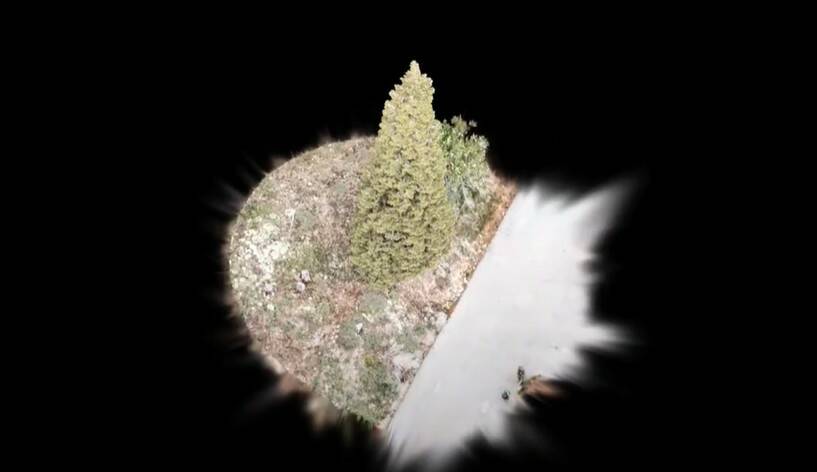
Beginning with the Alaskan Sitka spruce selection in 2024, LiDAR (Light Detection and Ranging) technology has helped streamline the selection process. For the second year, the Forest Service partnered with Arizona’s Ironwood Forestry to use LiDAR and drone footage to capture 3D images and measurements of each candidate tree.
Eli Jensen, forest technology and innovation consultant for Ironwood Forestry, elaborated via a HTNF video describing the technology. “Our backpack LiDAR scanner takes anywhere from 500,000 to 2 million points per second,” Jensen said. “It’s on a rotating gimbal so it’s getting points 360 degrees, creating a point cloud,” which offers a three-dimensional model of each nominated tree.
“Ironwood Forestry’s images helped visualize, three-dimensionally, which trees had the healthiest, most full crowns. It really helped with the decision-making process,” said Leao.
A state-wide tour
As a representative of the AOC, Jim Kaufmann, Executive Director of Capitol Grounds and Arboretum at the Architect of the Capitol, visited Nevada July 20-25 to evaluate the nine nominated trees. His week-long visit coincided with the ornament decorating event held at Pahrump Community Library.
“We allocated a full week [to tour the] different geographic locations across the state, to accommodate the drive times,” Leao explained. “The team arrived in Las Vegas on a Sunday, spent Monday and Tuesday at the Spring Range, then flew to Reno Tuesday afternoon to view the trees in the Reno-Carson City area on Wednesday and Thursday.”
“Although the southern white fir (Abies concolor) and the northern red fir (Abies magnifica) are similar, there are some slight differences in needle color and bark color,” said Kaufmann. “The red fir trees I reviewed were growing at higher elevations and were generally exposed to harsh climate conditions. This generally showed tighter growth attributes of the tree when compared to the white fir candidates in the south.”
The U.S. Forest Service characterizes the red fir by its distinctive blue-green needles that point upward and dense, sturdy branching, perfect for hanging ornaments. As red firs mature, the thick bark turns a reddish purple.
Final selection process
What ultimately determined the final choice? “It’s a lengthy process,” said Leao, “but once you see that tree — once it hits your eyes — everything just pops and lights up. The perfect tree meets all the requirements and allows for safe harvesting and transport. It’s the one that will look best on the West Lawn of the Capitol.”
To safeguard against unforeseen events such as wildfire, disease, or vandalism, the Forest Service designates both a primary and a backup tree in the northern and southern regions.
Kaufmann delineated the criteria for the selection. “Size and form are the first thing I look at. That helps narrow down the candidates. Then I work with the U.S. Forest Service to review other pertinent tree and forest health conditions. Then we look at the feasibility of harvest, including crane and truck access.”
Reflecting on the significance of its connection to local communities, Kaufmann added, “I like to gain an insight into the history of the land and learn about the communities in the area. I always think that this is important since it is the People’s Tree.”
A national celebration
On August 5, Kaufmann and Humboldt-Toiyabe National Forest announced that a 53-foot red fir from the Carson Ranger District was chosen, spotlighting Nevada’s reputation as a steward of our diverse public lands and drawing attention to our rich natural resources.
Humboldt-Toiyabe National Forest Supervisor Jon Stansfield shared his enthusiasm. “The selection of the tree brings us a step closer to the honor of sharing the first Capitol Christmas Tree from the Humboldt-Toiyabe National Forest and the state of Nevada with the nation. From starry skies to neon lights, we plan to use this journey to showcase the best of the Silver State, including the spectacular high-elevation forests that produced the perfect Christmas tree.”
More than two months will pass between the final selection and the harvest. Watch for our next story in the series in late October when we will learn about the harvest process.
Jessica Sterling is editor of the Pahrump Valley Times.
The People's Tree's journey to D.C.
Mid-July: Humboldt-Toiyabe National Forest (HTNF) identified and nominated nine candidate trees
July 20-25: A representative of the Architect of the Capitol visited Nevada to select the final tree plus one or two alternates
Aug. 5: Final tree chosen
Aug.-Oct.: HTNF preps logistics for harvest and transport
Sept. 15: Ornament deadline
Late October: Harvest
First two weeks of November: Whistle stop tour across the U.S.
Mid-Nov.: U.S. Forest Service delivers the tree to the Architect of the Capitol in Washington, D.C.
Early Dec.: Installation, decoration and lighting
Learn more at uscapitolchristmastree.com